
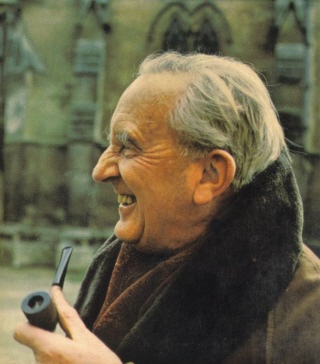
This is a fantastic exploration by an insightful blogger!
J. R. R. Tolkien’s fictional world was much more subtle than the sword & sorcery, high fantasy stuff we get too often from movies and books.
Tolkien didn’t write allegory and his stories operate on many levels and his deep Christian faith is infused in them all.
He once wrote,
“But I cordially dislike allegory in all its manifestations , and always have done so since I grew old and wary enough to detect its presence.
I much prefer history, true or feigned, with its varied applicability to the thought and experience of readers.
I think that many confuse ‘applicability’ with ‘allegory’; but the one resides in the freedom of the reader, and the other in the purposed domination of the author.”1
He preferred for the reader to interpret meaning for themselves rather than to be restricted to what the author had decided they should comprehend from it.
One such interpretation is linked below…
In Bret Devereaux’s masterful essay, he weaves an intriguing tapestry of Tolkien’s idea of power and the exercise thereof by the various beings in his legendarium.
Ever since reading Tolkien’s epic novel, I’ve always been fascinated by the idea that their is more beyond this physical world.
The realities in the Unseen world of The Lord of the Rings have tremendous impact on things in the Seen world of the story.
An echo, if you will, of how it is in our real world.
Particularly in giving us hope.
I hope you enjoy the read.
That’s it for now. Thanks for showing up. It matters.

Footnote:
- Foreword. The Lord of the Rings, by J. R. R. Tolkien, Houghton Mifflin, 1987, p. 5 ↩︎
Postscript: The image at the top of the page is my favorite photograph of J. R. R. Tolkien, found on the paperbacks in the boxed set gifted to me in the mid-Seventies by my mother; a treasure forever.
 Veni. Vidi. Scripsi.