
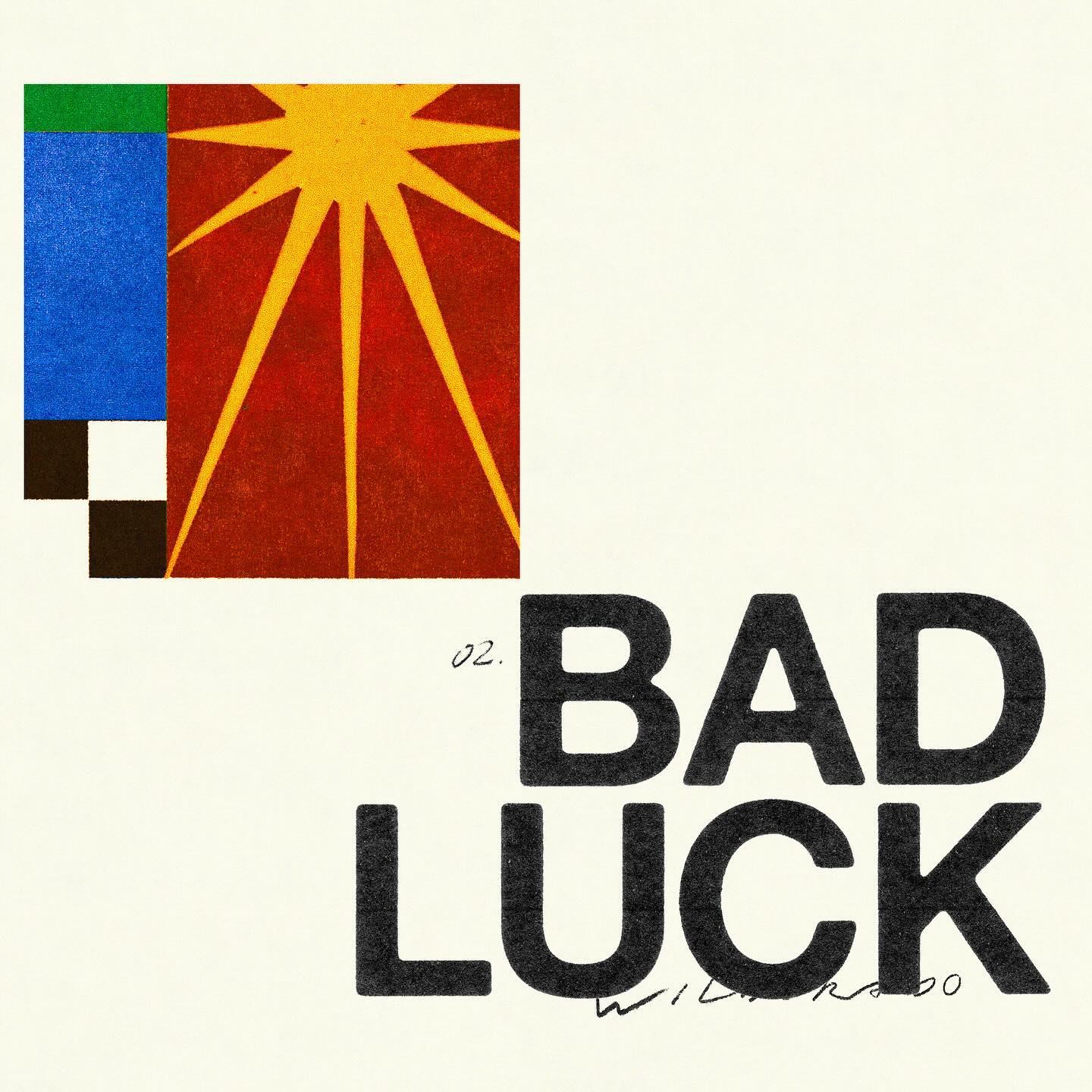
I’m not entirely sure whose voice speaks through Wilderado’s “Bad Luck,” but it sketches a character I found hard to ignore. I wrote this lyrical breakdown to explore that.
I’ve followed the band since 2018 when I first heard “You Don’t Love Me” on their Favors EP. That track stood out for its honest portrayal of a mess of a relationship, raw and tangled with emotion.
Since then, Wilderado’s music has grown. “Bad Luck” from their 2024 album Talker offers a vivid picture of a restless soul. The soul is caught in a cycle of fleeting pleasure, emotional numbness, and a spiritual drift.

l to r: Max, Tyler, and Justin, seemingly stopped on the stairway to success. Photo by brentgoldmanphoto
Wilderado is a trio from Tulsa, Oklahoma—Max Rainer on lead vocals and guitar, Tyler Wimpee on guitar and vocals, and Justin Kila on drums.1
They began in 2015 and built a steady following with a sound that blends indie rock and folk. Their songs often touch on themes of longing and identity, and sometimes hint at a search for something deeper.
I’m drawn to “Bad Luck” not because it romanticizes a troubled life—quite the opposite. The jangly, bright guitars from Max and Tyler provide a vivid contrast to the song’s melancholy lyrics. Justin’s steady drumming, combined with a bass line currently played by Aaron Boehler2, creates a solid foundation that propels the track forward, even as the story it tells feels trapped in a cycle.
The song reminds me of the quiet struggles many people carry—hidden behind smiles and a confident front. Sometimes, secular music like this gives me a window into those struggles in a way that contemporary Christian radio doesn’t quite capture for me.
The character in “Bad Luck” seems trapped in a pattern. Pleasure is only temporary. Emotions are dulled. A deeper sense of purpose feels out of reach. The title points to trouble, but there’s also a tone of resignation—as if the person believes life will unravel no matter what.
Here are some lines worth considering (and I recommend giving the song a listen before reading on):
“Happiness seems to happen less / When you go where the season’s best”
Moving to a new place or chasing new experiences doesn’t bring peace. The character seeks distractions—perhaps trying to quiet anxiety or restlessness—but joy remains elusive.
“You find a lover, find a hotel / You try another, try a carousel”
Intimacy is fleeting, a dizzying cycle without meaning or real connection. Even the melody of the song sounds like a swirling of guitars and vocals.
“Father, Son, and the Holy Ghost / Who’s the one that we need the most”
The mention of the Trinity here feels distant, almost questioning—suggesting a faith once familiar now shadowed by doubt or distance.
“I get older and then I die / I should know when to say goodbye”
A blunt recognition of mortality and the finality of life. The “I should know” hints at some awareness, a tension between helplessness and personal responsibility.
“Later on, in the corners of your own hell / You hide away and get by”
This suggests surviving rather than thriving, “your own hell” an implication that the torment may be self-inflicted or at least personal. Even moments that go “well” don’t bring peace; they only deepen the unease.
This isn’t just a story of bad luck. It’s a portrait of someone caught between surviving and truly living—numb, worn down, and perhaps unaware of where healing might come. And in there somewhere we might find an opportunity to share Christ.
That’s it for now. Thanks for showing up. It matters.

References:
- Kuschel, A. (2023). Behind the Music: A Q&A with Wilderado. Medium. ↩︎
- See this article by Clif Rhodes of MusicSceneMedia.com, which includes a mention of Aaron in its review of a Wilderado show in October 2023. Clif’s disclaimer that he’s a Wilderado-phile only adds credibility—to me anyway—to his take on the band’s performance. (smile) ↩︎
 Veni. Vidi. Scripsi.