
Editor’s note: This reflection comes a little late, but Apollo 11’s wonder is timeless.
Fifty-six years ago last month, three men set out to do what humanity had only dreamed of. They flew a quarter of a million miles into the dark, landed on the Moon, and came safely home. In those eight days, they changed forever how we see ourselves and our small blue world.
Three Men, One Mission
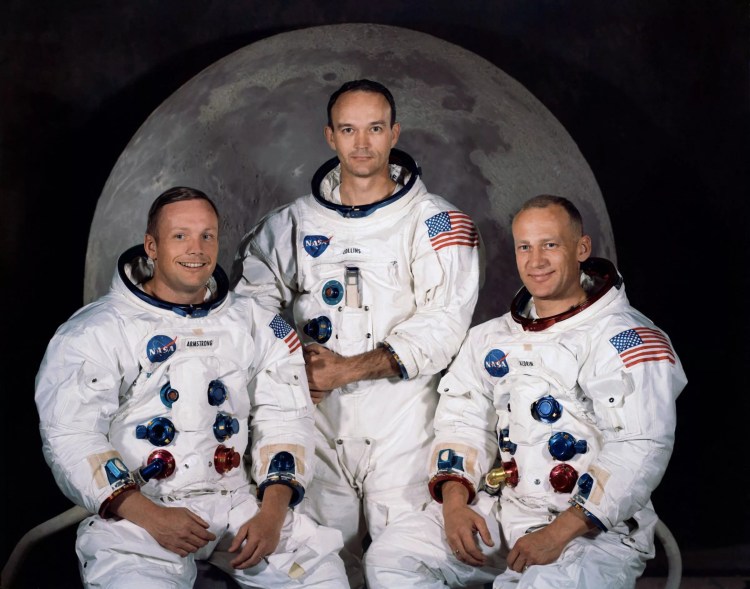
Neil Armstrong, Buzz Aldrin, and Michael Collins. Their names are stitched into history now, but in July 1969 they were flesh-and-blood men, carrying the weight of a planet’s hopes. Armstrong would guide the landing in Eagle; Aldrin would follow him onto the surface; Collins would keep lonely watch above, circling in Columbia.
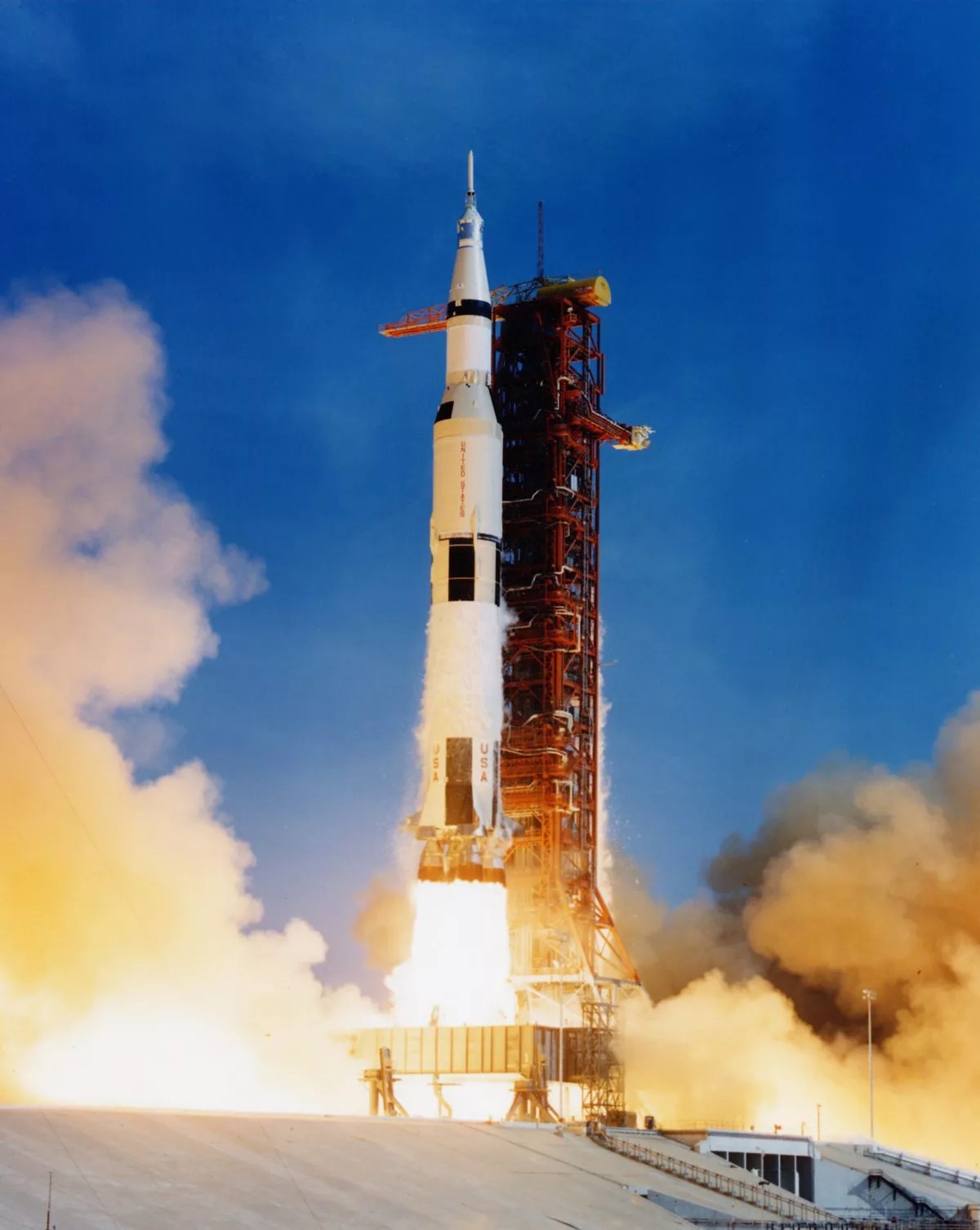
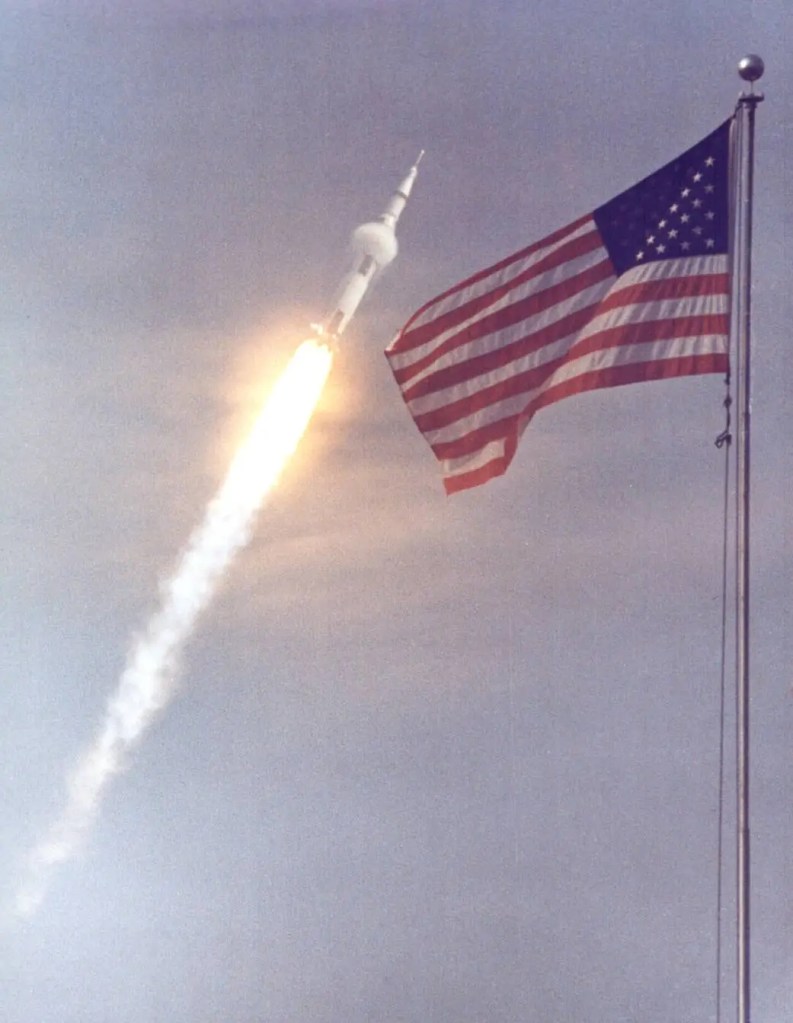
The Saturn V lifted off from Kennedy Space Center’s launch pad 39A with immense power, shaking the surrounding coastline. The launch produced dramatic footage of the rocket’s ascent, cameras capturing its force. The mission carried more than a flag or a patch; it carried the longings of every person who had ever looked up at the Moon and whispered, “What if?”
A Child’s Wonder
I was almost five that summer, small enough to fit neatly in my father’s lap. We sat in his recliner as the images flickered on our family television. Outside, the Louisiana weather was probably sweltering, but inside, time itself seemed to hold its breath. We were going to the Moon!
I was too young to grasp politics or Cold War rivalries. The sense of human achievement was beyond my understanding, but the event itself—men reaching the Moon—was undeniably extraordinary.
Tranquility Base
It took about three days for Apollo 11 to reach the Moon. The descent to the surface was tense, with alarms blaring and fuel running low. On the evening of July 20, 1969, Armstrong’s calm voice came through: “Houston, Tranquility Base here. The Eagle has landed.”
The broadcast that followed was grainy and ghostlike, the picture washed in silvery gray, and the sound was scratchy. The lunar landing became an event recorded in history, inspiring awe across the globe.
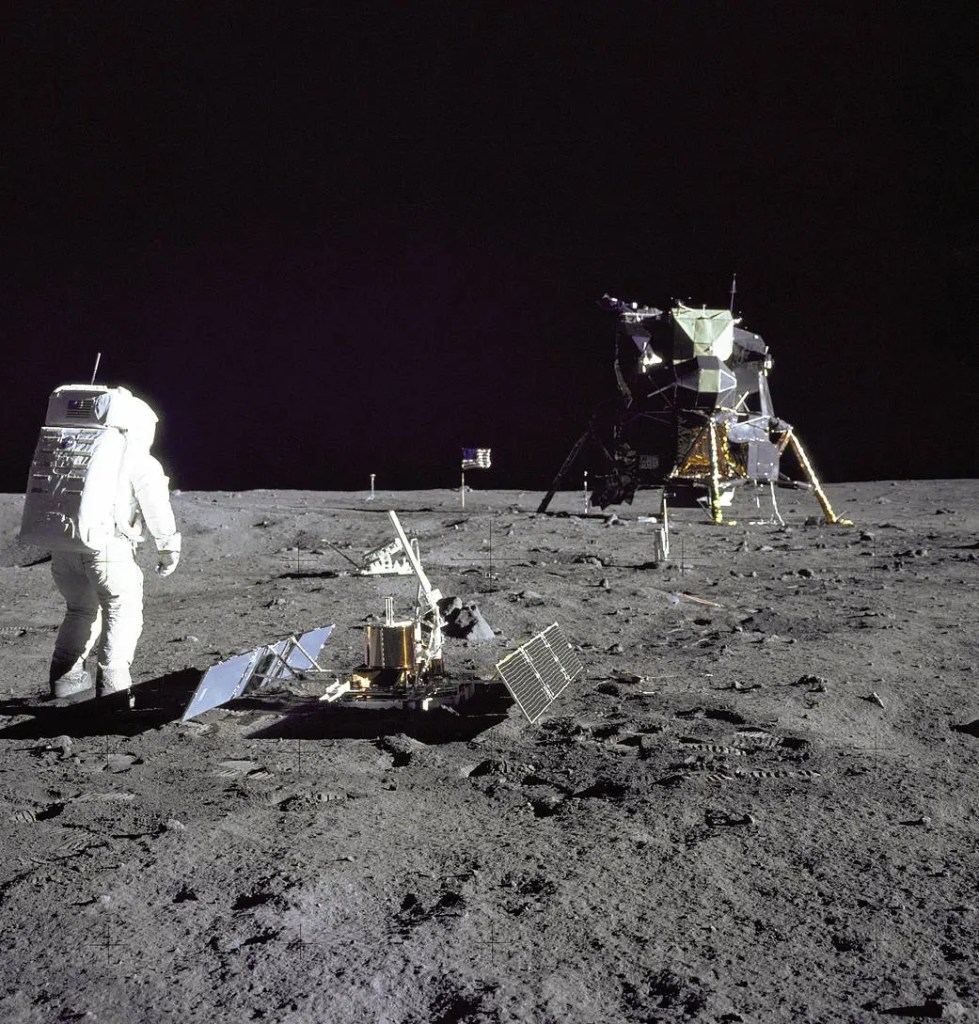
Growing Up in the Space Age
For a child living between Houston’s Mission Control and the Michoud rocket plant in New Orleans, Apollo was more than television. A few years later my family toured the space center. I stood in front of a blackened Command Module that had survived the furnace of reentry, its heat shield charred by fire nearly as hot as the surface of the sun. Seeing that capsule drove home the truth: it wasn’t easy to leave Earth, and it was even harder to come back.
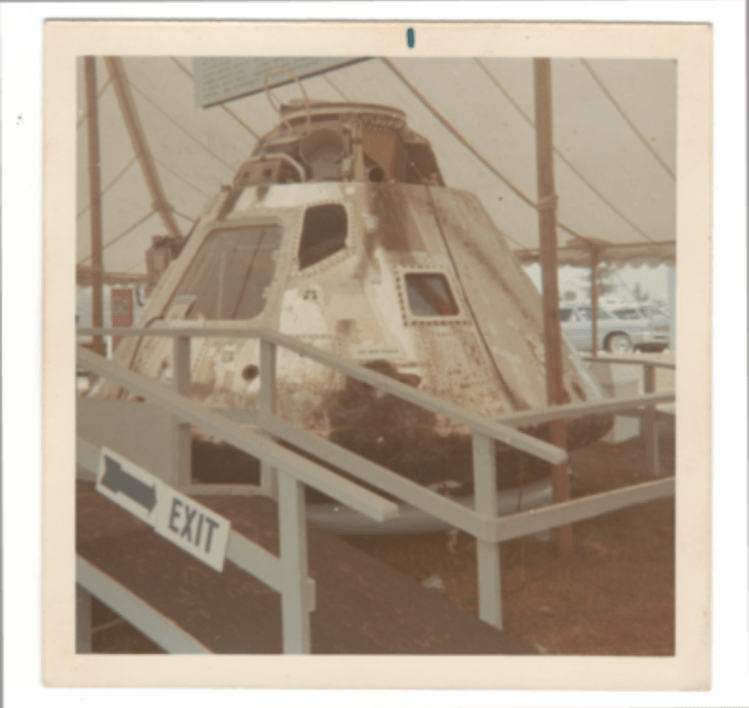
Photos from a little boy’s family trip to the Space Age: Apollo Mission Control Center in Houston! Sadly, I don’t have any details on which mission this CM flew on. 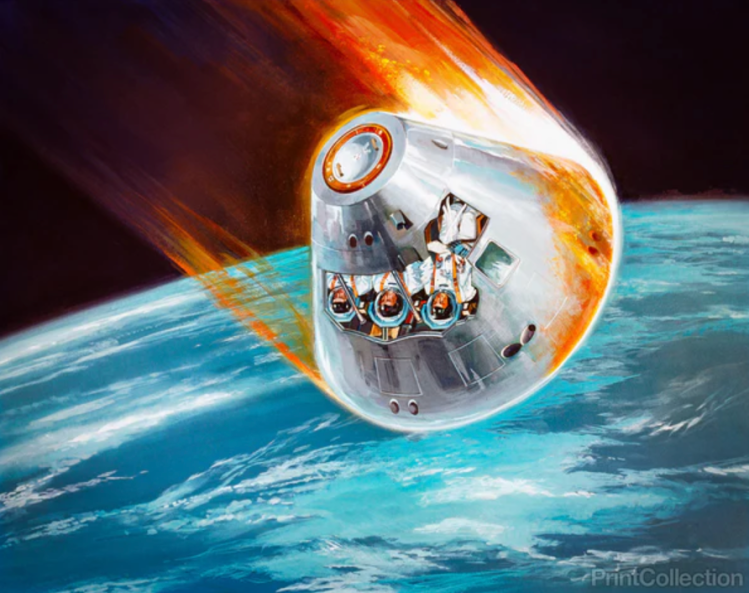
Artist’s conception of the three Apollo crew sitting with backs down as the CM re-enters the Earth’s atmosphere. 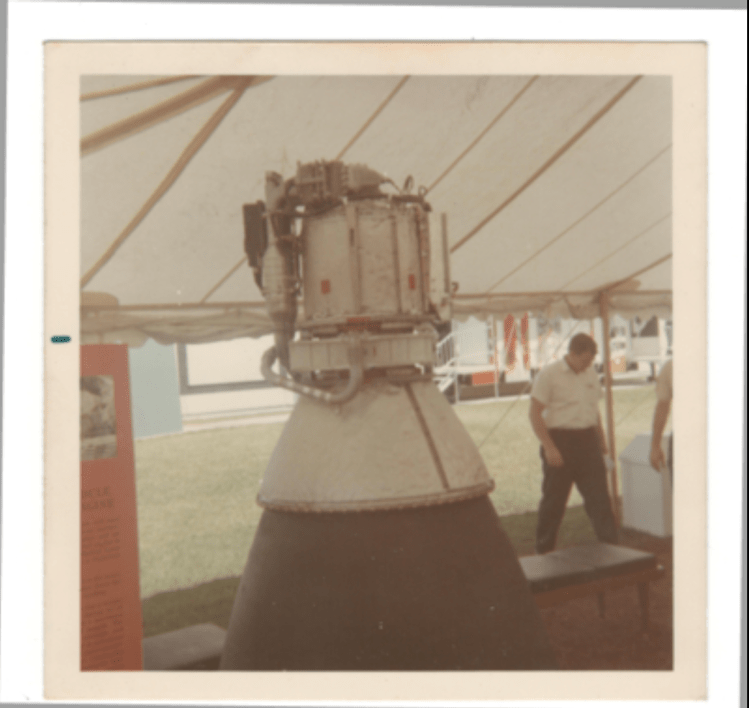
Photos from a little boy’s family trip to the Space Age: Apollo Mission Control Center in Houston! This is a rather battered and used Service Module main engine. 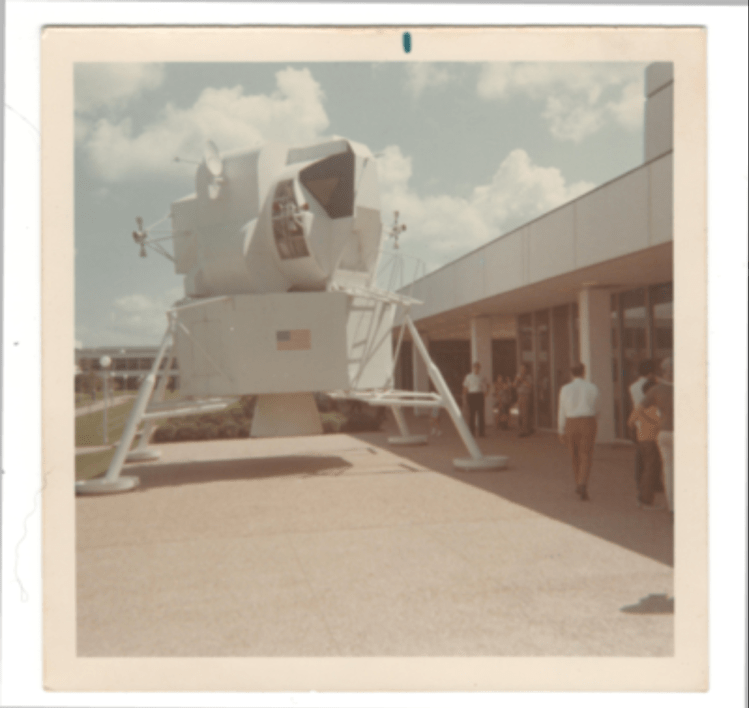
Photos from a little boy’s family trip to the Space Age: Apollo Mission Control Center in Houston! This is a mock-up of the Lunar Excursion Modules that landed on the Moon. 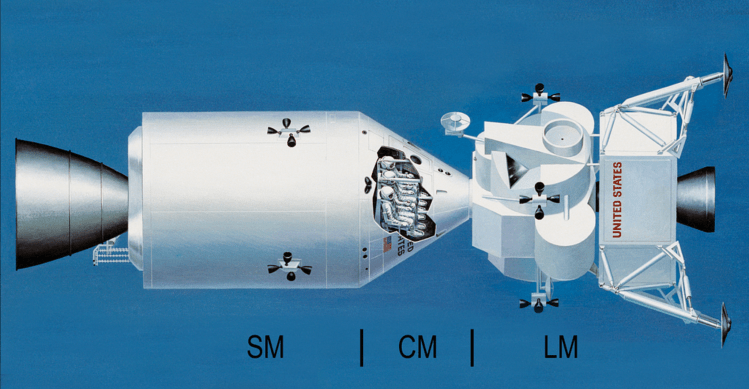
Artist’s conception of the assembled Apollo spacecraft: The Command Module and Service Module were called Columbia and the Lunar Module was called Eagle. You can see the rocket engine bell in this drawing in one of my photos.
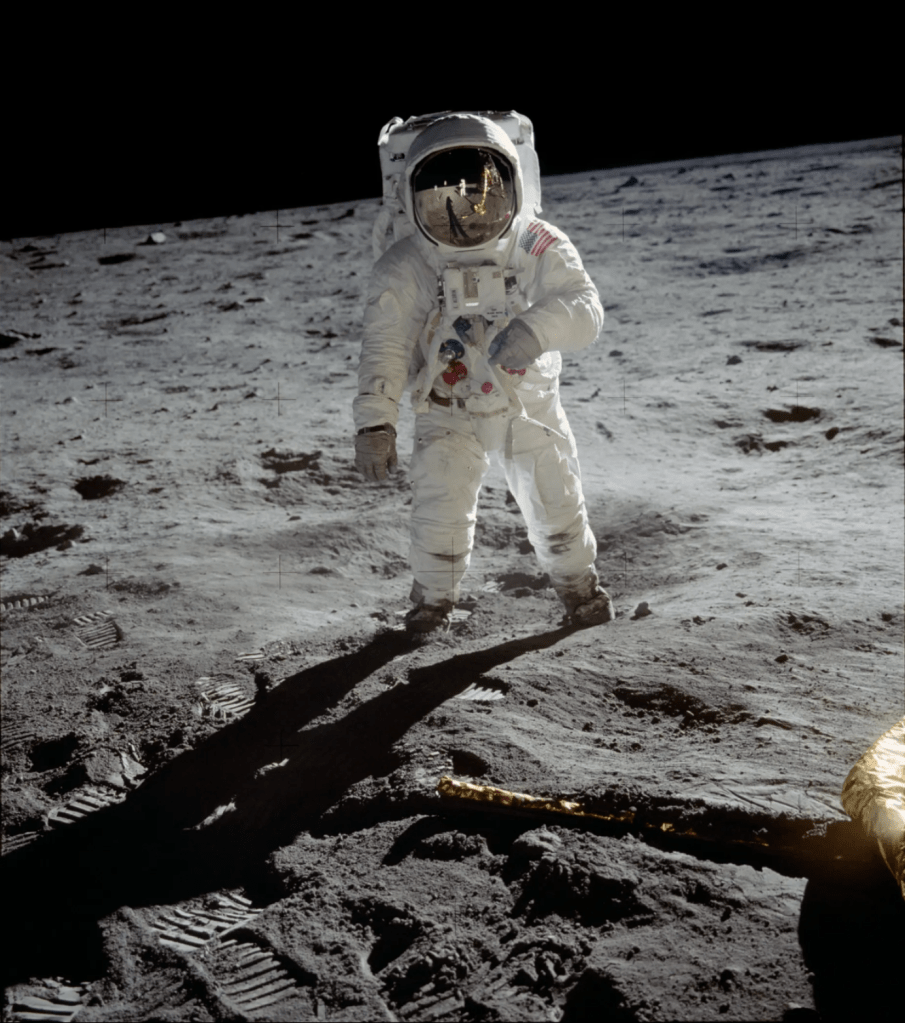
My father also bought me a framed foil print of Buzz Aldrin on the Moon. The print hung on my wall for years, sparking a sense of wonder about humanity’s ability to leave our home planet and touch another world.
A Larger Vision
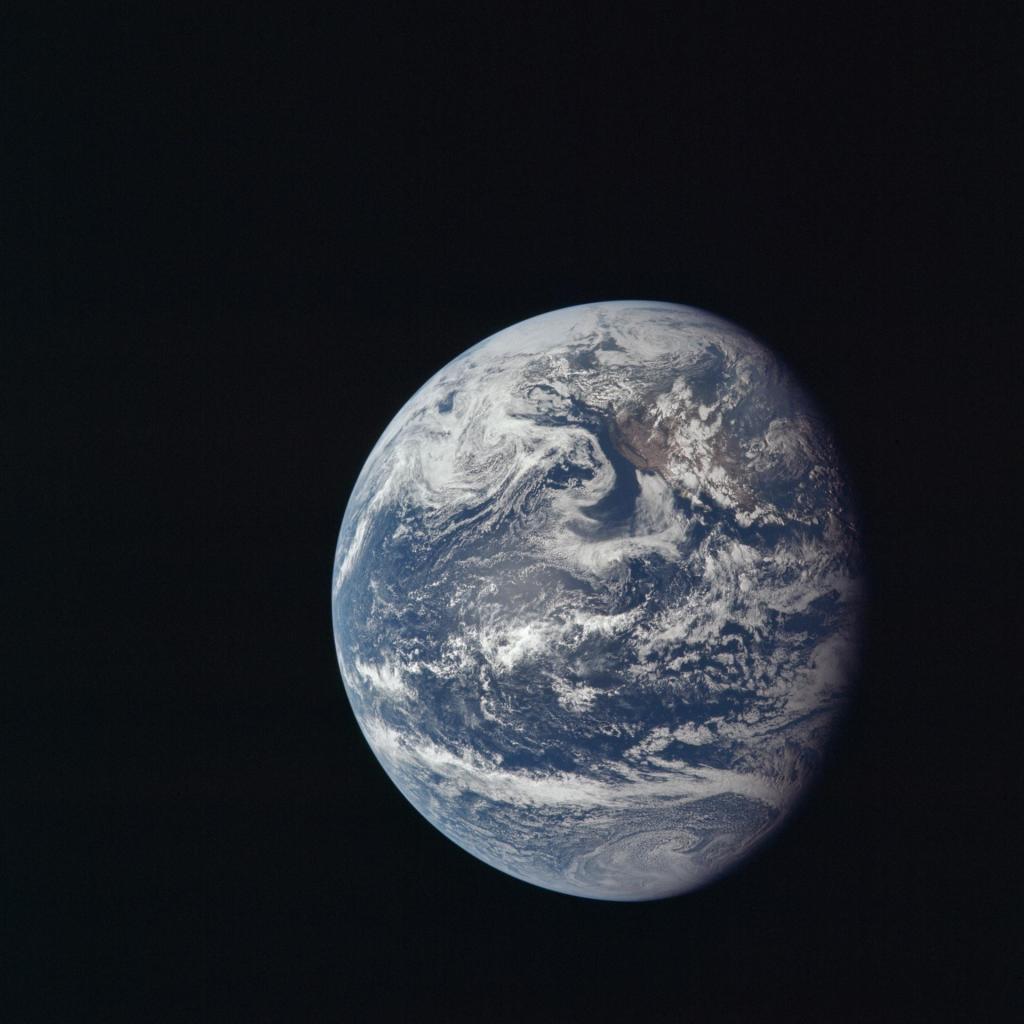
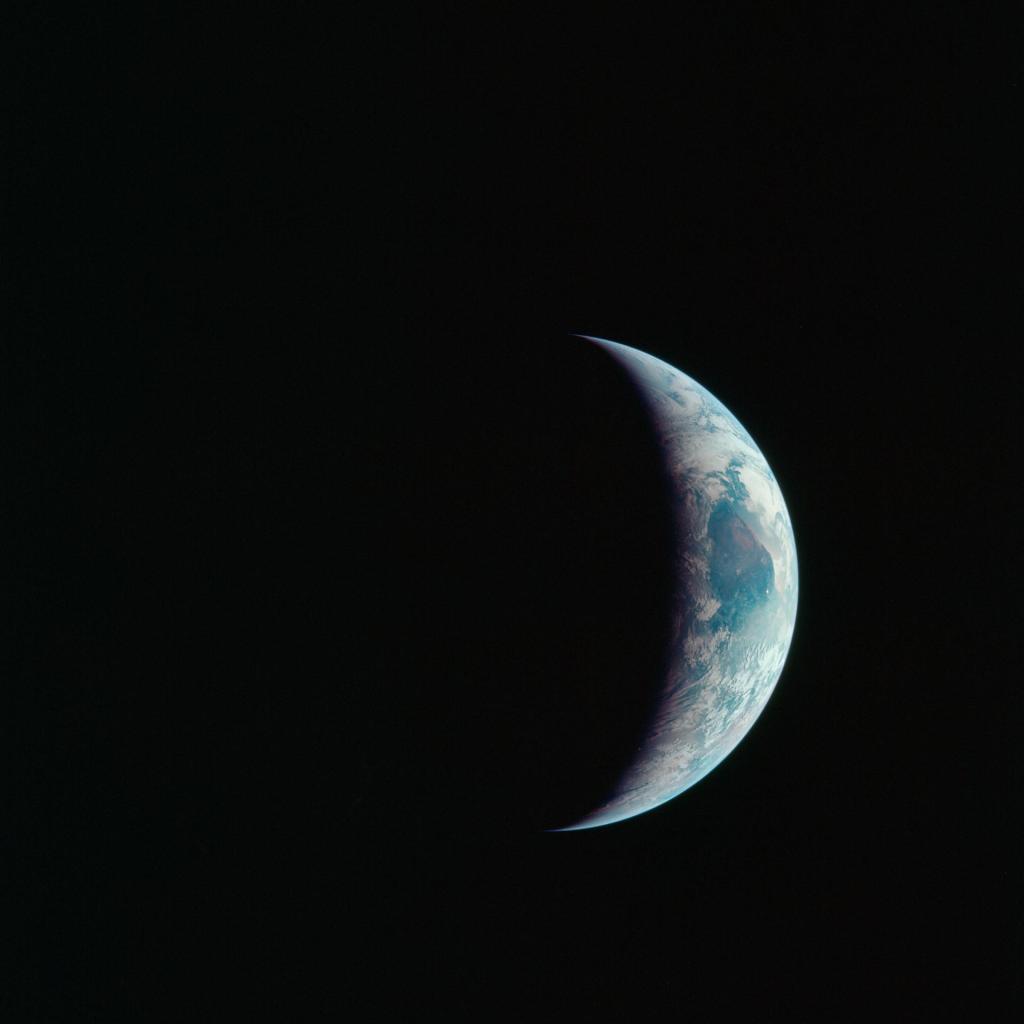
In photos taken from the Moon, Earth appears no larger than a marble—bright, fragile, and alone in the darkness. Many astronauts have described the “overview effect,” a perspective that highlights the smallness of our divisions when the whole planet fits in your window.
Buzz Aldrin marked the moment in a deeply personal way. Before stepping onto the lunar surface, he took communion—the first act of worship on another world. Later he reflected that just as the laws of physics held their ship together, spiritual laws hold human life together.
For that brief time, technology and faith stood side by side, a reminder of both our limits and our calling.
Return and Reflection
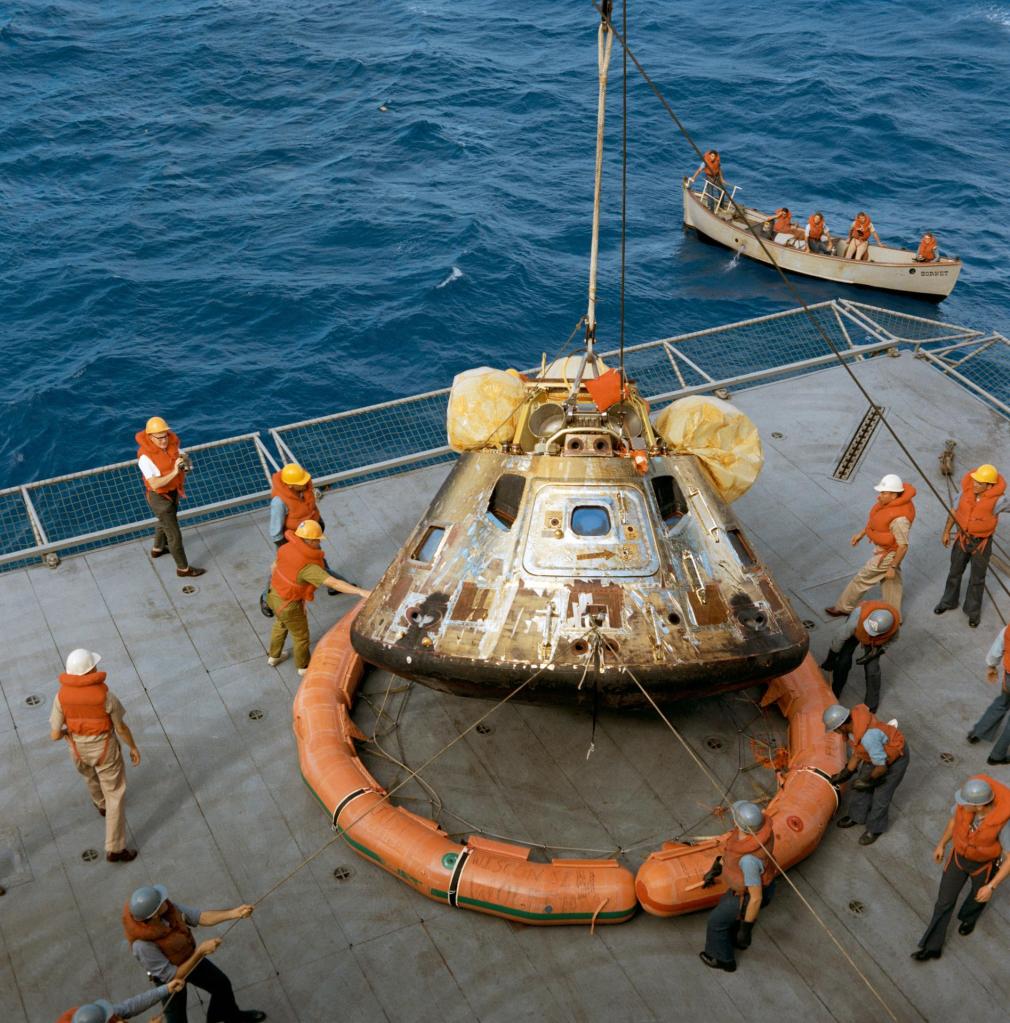
President Kennedy’s dare to America to put a man on the Moon and bring him home before the decade came to be: on July 24, 1969, the astronauts splashed down in the Pacific, safe at last!
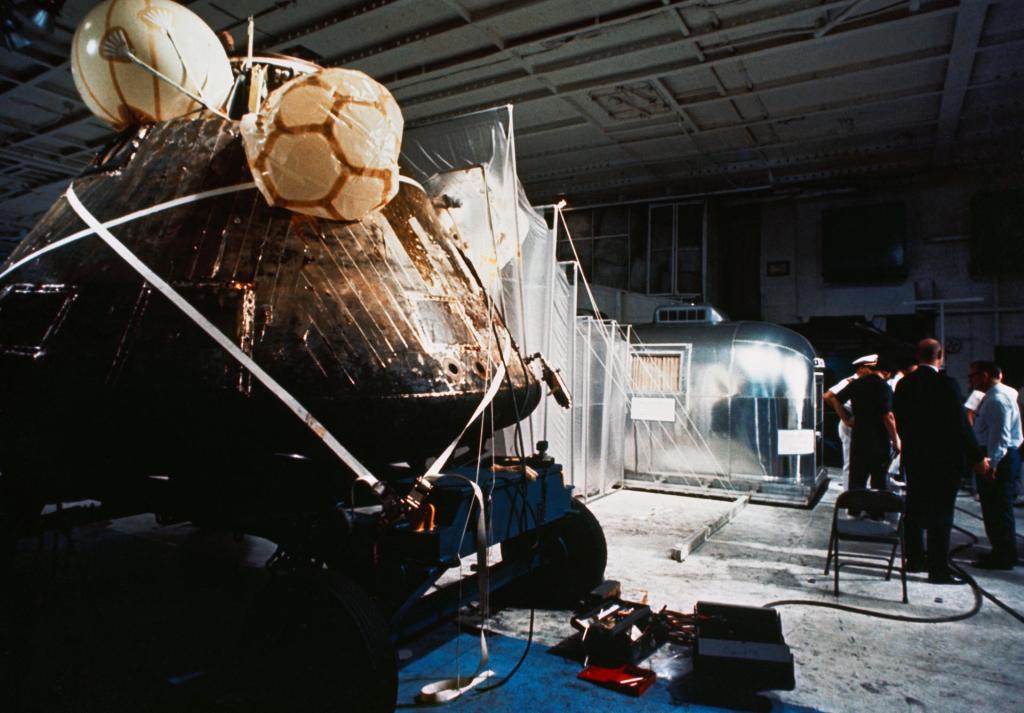
For three weeks they lived in quarantine inside a silver trailer, playing cards and waiting, not because anyone expected Moon germs, but because no one could prove there weren’t any. It was caution born of respect for the unknown — the same caution that made the whole journey possible.
From Moon Dust to Micro-computers
In 1969, Apollo 11 cost about $355 million. Adjusted for today, that’s around $3 billion — roughly what Americans spend on pet food in three years, or on tobacco in six months. For the price of those familiar things, we reached the Moon.
At the height of their flight, the crew was moving nearly 25,000 miles an hour — fast enough to cross America in six minutes! Their guidance computer had just 4 kilobytes of memory; our phones now have over 4 gigabytes — like a single filing cabinet compared to a million. And it’s because the space program pushed miniaturization that we can carry these tiny supercomputers in our hands. Meanwhile, here I am, doom-scrolling Reddit and watching Reels.
The Legacy
Apollo 11 was more than machinery, though. With less computing power than a pocket calculator, and the determination of 400,000 people, humanity leapt farther than it ever had before.
Its greatest gift was wonder—the sense that our reach can exceed our grasp, and that looking back at Earth from space changes how we see one another.
That’s it for now. Thanks for showing up. It matters.

Image Credits: NASA; National Air & Space Museum; Lunar and Planetary Institute.
Websites sourced for this article:
Lunar and Planetary Institute: LPI’s mission is to advance understanding of the solar system by providing exceptional science, service, and inspiration to the world.
NASA Apollo 11: The primary objective of Apollo 11 was to complete a national goal set by President John F. Kennedy on May 25, 1961: perform a crewed lunar landing and return to Earth.
NASA Humans in Space: For more than two decades, people have lived and worked continuously aboard the International Space Station, advancing scientific knowledge, and making research breakthroughs that are not possible on Earth.
NASA Missions: Exploring the secrets of the universe for the benefit of all. NASA investigates the unknown in air and space, innovates for the benefit of humanity, and inspires the world through discovery.
The Planetary Society: TPS introduces people to the wonders of the cosmos, bridging the gap between the scientific community and the general public to inspire and educate people from all walks of life.
Smithsonian’s National Air & Space Museum: NASM explores the history, science, technology, and social impact of air and space travel while maintaining the world’s largest collection of historic aircraft and spacecraft. (I saw there on display the lighted 11-foot Starship Enterprise, used in filming the original Star Trek TV series!)
History.com: Buzz Aldrin Took Holy Communion on the Moon. NASA Kept it Quiet.
Word on Fire: Buzz Aldrin and the Laws of Spiritual Physics.
 Veni. Vidi. Scripsi.