
A Quietly Magical Date
Some anniversaries sneak up on you. October 20 is one of those.
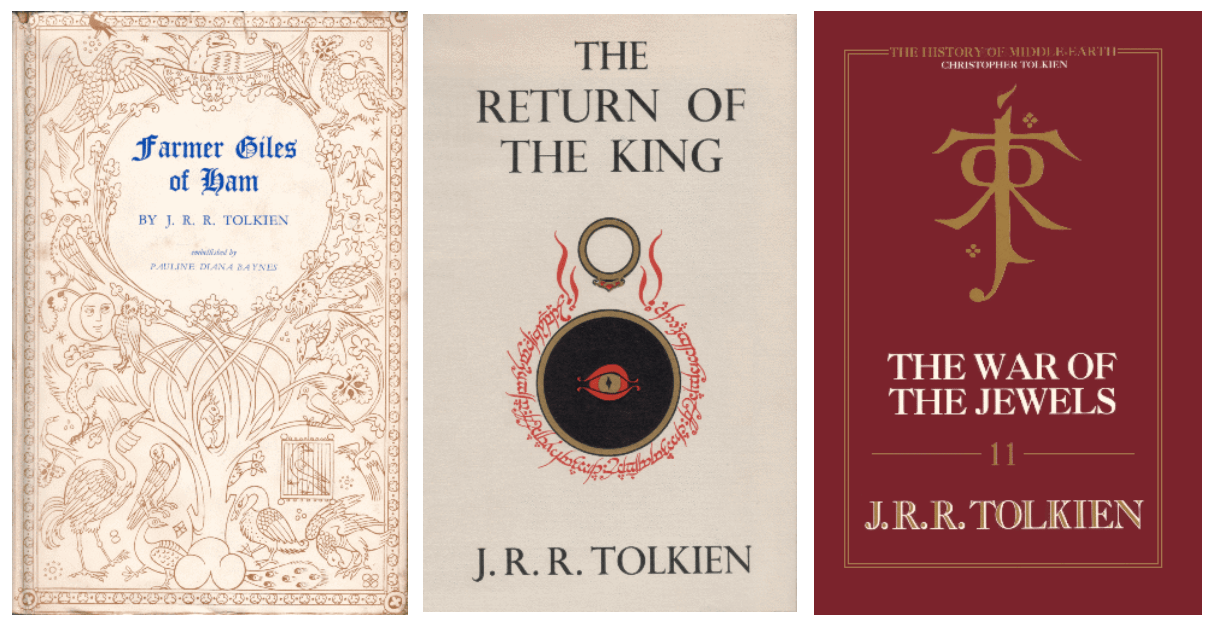
On this day, in four different years, four very different books came into the world:
- 1949 — Farmer Giles of Ham, a playful tale of an unlikely hero
- 1955 — The Return of the King, the grand finale of The Lord of the Rings
- 1994 — The War of the Jewels, a deep dive into Tolkien’s posthumous legendarium
- 2003 — Tolkien and the Great War, a biography exploring the man behind Middle-earth
It’s a rare coincidence — or maybe not — that story, scholarship, humor, and biography all meet on one October day.
Tolkien’s entire body of work is often called his legendarium, a vast collection of mythic writings that form the background and history of his fictional universe.
What makes Tolkien’s world so wondrous—and at times daunting—is the depth to which he imagined it. He didn’t just write stories; he built a cosmos. He invented languages, then asked who might speak them. He mapped mountains and moon phases to keep his world consistent. Layer upon layer, he crafted a living world whose history feels as ancient and intricate as our own.
That richness is what both challenges and rewards the reader.
Farmer Giles of Ham (1949)
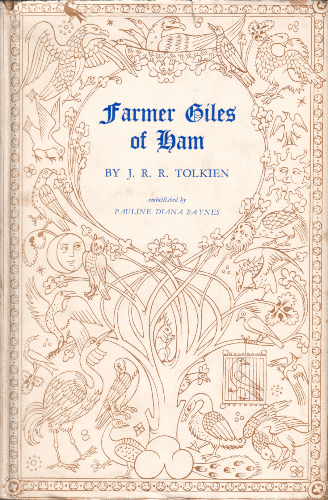
A lighter, whimsical tale, Farmer Giles of Ham tells the story of an unlikely hero — the humble farmer Giles — who faces dragons, kings, and unexpected adventures. For longtime Tolkien fans, it shows the playful side of his imagination; for newcomers, it’s a charming entry into Middle-earth without the epic weight of The Lord of the Rings.
When it was published on October 20, 1949, readers encountered Tolkien’s humor, love of wordplay, and knack for storytelling in a more down-to-earth setting. The story’s tone is humorous, satirical, and full of clever medieval-style language, yet it contains underlying themes of courage, leadership, and justice.
What makes it special:
- Tolkien’s invention of names, places, and even “heroic” bureaucracy shows his early playfulness with language.
- The dragon Chrysophylax is memorable for both wit and menace, making the tale engaging for all ages.
- A glimpse of the rural Middle-earth that would later underpin larger stories like The Lord of the Rings.
Why it matters:
- For the Tolkien fan: It’s a delightful demonstration of Tolkien’s literary range — humor, satire, and storytelling craft in one short volume.
- For the newcomer: A gentle, accessible entry point into Tolkien’s world — fun, brief, and full of imagination.
Even in a story about a small farmer, Tolkien’s world-building shines: maps, names, and history all hint at a larger Middle-earth, rewarding both casual readers and those curious about his wider legendarium.
The Return of the King (1955)
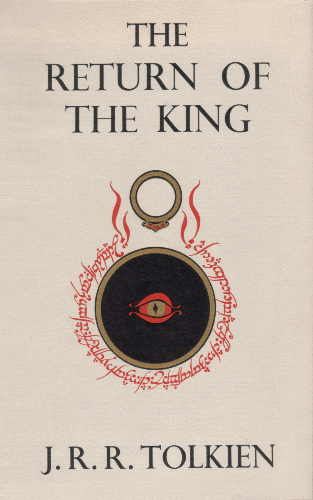
When The Return of the King appeared on October 20, 1955, readers closed a chapter of their own lives along with the Third Age1 of Middle-earth. Frodo and Sam, Aragorn and Gandalf, hobbits2 and kings — all the threads came together.
Tolkien himself thought the title gave too much away, but it fit the tone of the book: victory tempered by loss and endings wrapped in memory.
What makes it special:
- The appendices — timelines, lineages, languages — give the world weight and history.
- Christopher Tolkien’s maps make the lands feel real and lived-in.
- “The Scouring of the Shire” and the tale of Aragorn and Arwen show that heroism isn’t just on the battlefield; it’s also in homecoming and in quiet courage.
Why it matters:
- For the Tolkien fan: It’s the story you’ve waited for — the culmination of years of adventure and depth.
- For the newcomer: It’s an accessible gateway into Middle-earth — you can enjoy the tale of friendship, courage, and choices even without knowing every detail of the past.
Even if you know it only from the films, ROTK is that rare ending that feels earned, reflective, and gentle.
The War of the Jewels (1994)
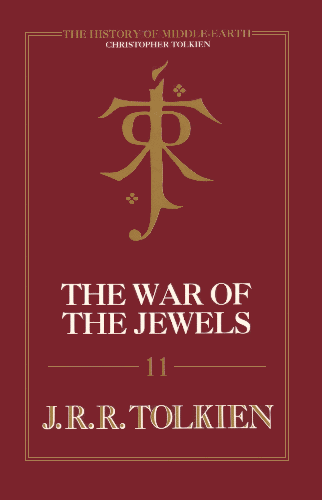
Thirty-nine years later, on October 20, 1994, The War of the Jewels arrived. It’s Volume 11 of The History of Middle-earth, Christopher Tolkien’s painstaking twelve-volume, thirteen-year project tracing how his father’s mythos evolved.
If ROTK closes the Third Age, this book dives deep into the First: the Grey Annals3, Húrin4 and his children, the struggle over the Silmarils5, and essays like Quendi and Eldar that explore Elvish6 identity.
Why it’s worth exploring:
- It shows Tolkien shaping stories over decades, revising and rethinking as he went.
- It reveals drafts, fragments, and notes that never made it to publication — the blueprints behind the legend.
- For anyone curious about the mechanics of Tolkien’s world, this is a backstage pass.
Why it matters:
- For the Tolkien fan: It’s a treasure trove of history, lore, and insight — seeing how Middle-earth grew from notes to legend.
- For the newcomer: Even a glimpse shows the depth and richness of Tolkien’s imagination — a hook for curiosity, sparking interest in the world behind The Lord of the Rings.
Even if you never read beyond this volume, it helps you see how stories are made — and remade — across a lifetime.
Tolkien and the Great War (2003)
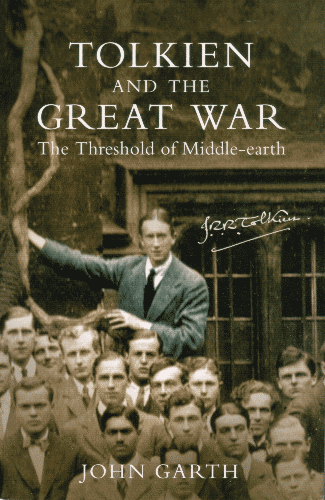
Then, in October 2003, John Garth’s Tolkien and the Great War gave readers a new lens: the young philologist7, his friends, and the First World War that shaped them.
Why it matters:
- Shows how Tolkien’s time amid the mud and fire of the Somme8 deepened his sense of loss, courage, and enduring fellowship.
- Explains the emotional foundation of Middle-earth — its scars, its hope, its quiet courage.
- Winner of the Mythopoeic Award, it’s readable for casual fans, not just scholars.
Why it matters:
- For the Tolkien fan: Provides context and texture for the stories you love — understanding the man behind the myth.
- For the newcomer: A human story of friendship, loss, and resilience — it’s a natural bridge to discovering Tolkien’s imaginative worlds.
For those who wonder where Tolkien’s imagination came from, Garth’s book traces it back to letters, friendships, and mud‑filled trenches.
Threading the Four
Look at them together:
| Work | Focus | Voice |
|---|---|---|
| Farmer Giles of Ham | Playful heroism | Tolkien the storyteller |
| The Return of the King | The story’s climax | Tolkien the storyteller |
| The War of the Jewels | The creation of myth | Christopher the archivist |
| Tolkien and the Great War | The life that shaped it | Garth the biographer |
One day, four perspectives: the tale, its construction, its humor, and its roots. And somehow, October 20 carries all of them.
Closing Thought
Whether you come to Tolkien for adventure, for depth, for humor, or for human insight, October 20 is a gentle reminder to pause, open the books, and trace the long, winding road behind the stories we love.
That’s it for now. Thanks for showing up. It matters.

Footnotes
- Tolkien’s legendarium is divided into four main Ages, each characterized by significant historical events and changes in the world of Middle-earth. ↩︎
- The most popular of his characters, hobbits are a fictional race created by J.R.R. Tolkien, known for being small, peaceful, and living in underground homes called hobbit-holes in a region called the Shire. They are characterized by their love for comfort, food, and a simple, unadventurous lifestyle. ↩︎
- The “Grey Annals” refer to a chronicle written by J.R.R. Tolkien that details the early events in Middle-earth, ↩︎
- In Tolkien’s legendarium, said to be the greatest warrior of all Men in Middle-earth. ↩︎
- Three fictional jewels that play a central role in the history of Middle-earth, leading to significant conflict and tragedy ↩︎
- Tolkien’s Elves were not the fairy-tale pixies so commonly thought of; they are a fictional race in his Middle-earth legendarium, characterized by their near-immortality, beauty, and deep connection to nature. They play significant roles in “The Hobbit” and “The Lord of the Rings,” with their complex history detailed in “The Silmarillion.” ↩︎
- A person who engages in the study of language in oral and written historical sources. ↩︎
- The Battle of the Somme was a major battle during World War I between British and French forces against the German Empire. It is known for its high casualties, particularly on the first day, which saw the British Army suffer 57,470 casualties, making it one of the bloodiest days in British military history. ↩︎
 Veni. Vidi. Scripsi.