
I met Bilbo Baggins when I was thirteen years old, standing in the hallway of DeRidder Junior High. The library door carried a poster that stopped me in my tracks. A curious, round fellow stood in his front doorway, pipe in hand, sending smoke rings lazily into the air. The art looked like watercolor washed across old parchment—earthy, grounded, like the kind of countryside Tolkien loved so fiercely.
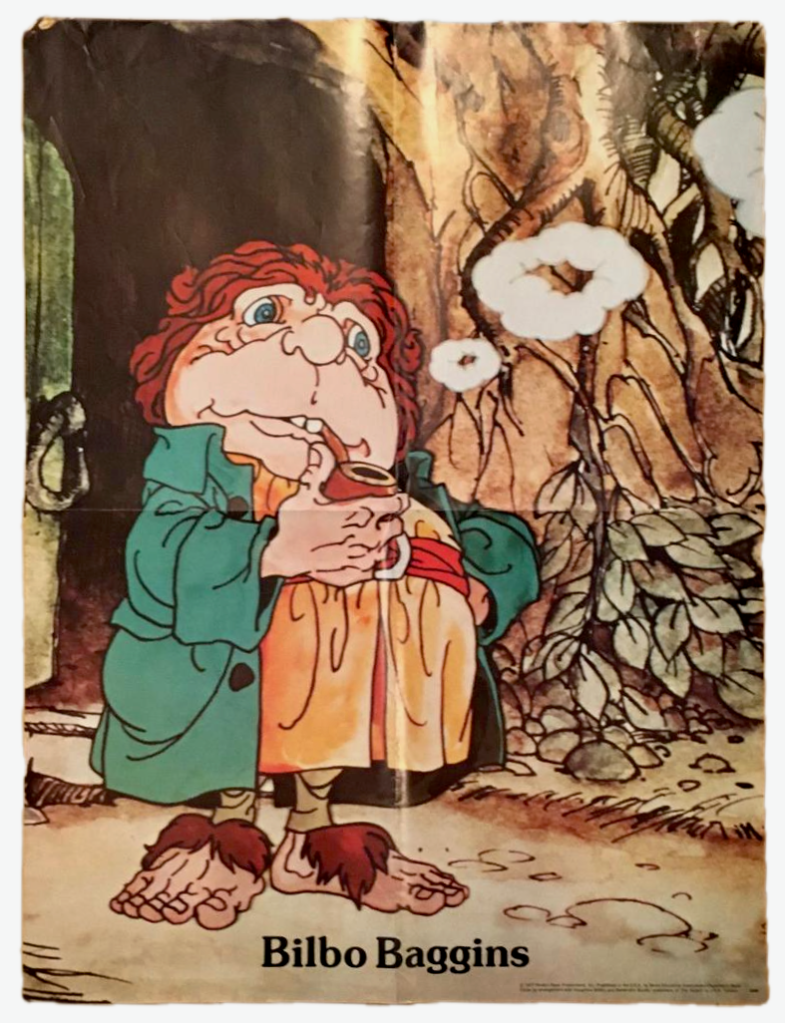
His hair was center-parted and flowing, his feet gloriously hairy, and underneath it all sat the name “Bilbo Baggins” in the kind of pragmatic 1970s typeface that belied the fantastical story behind the name. That poster nudged open a door I didn’t know I’d be walking through for decades.
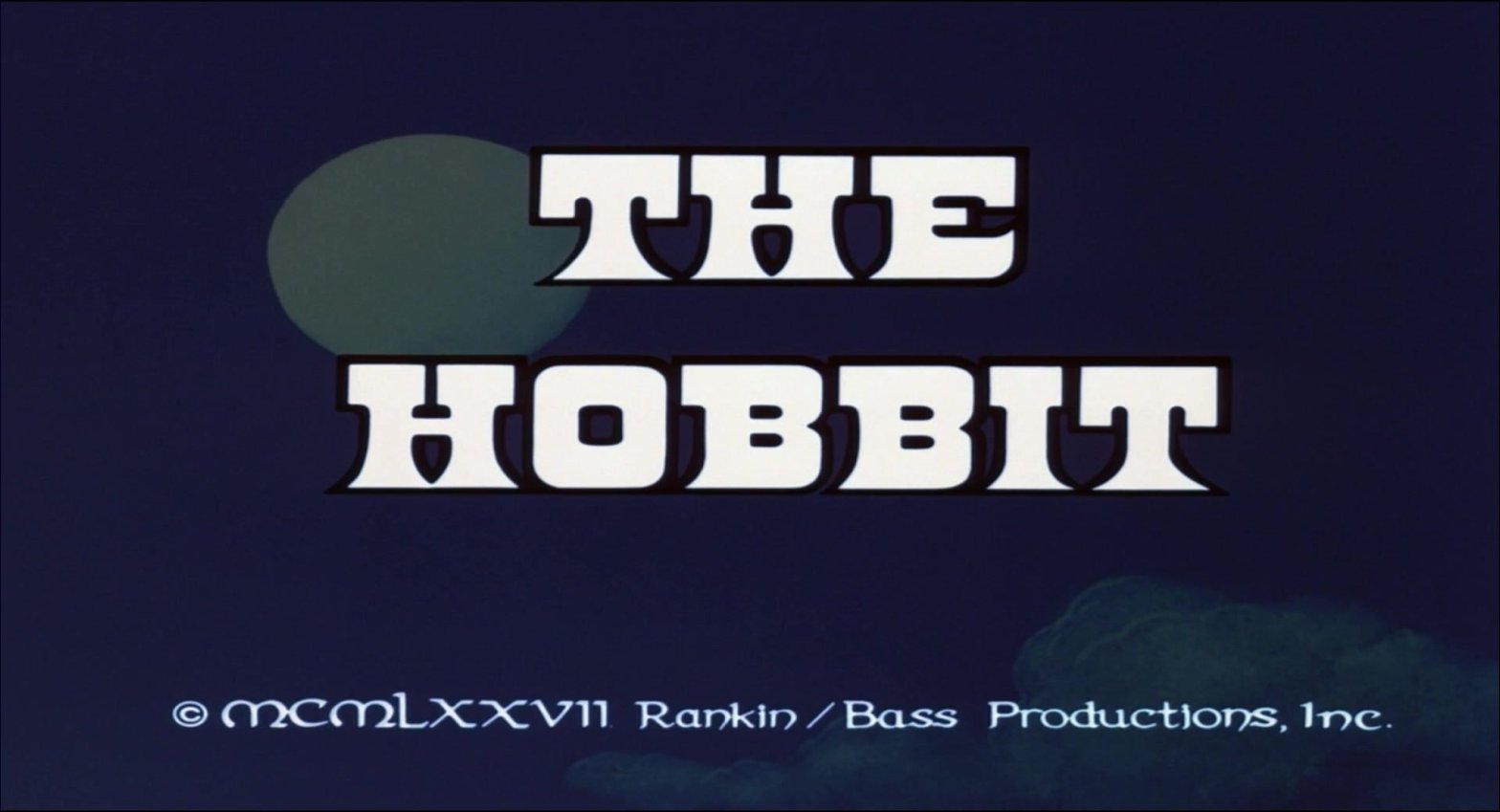
It wasn’t long after that I watched the Rankin/Bass musical television special—The Hobbit—animated by Topcraft, a Japanese studio. Rankin/Bass were gentle giants of animated holiday specials: Rudolph The Red-Nosed Reindeer, Santa Claus Is Comin’ to Town, Peter Cottontail. Their seasoned hands shaped Tolkien’s world into a 75-minute feature that aired on NBC on November 27, 1977.
And something about it stuck.
One reason, I learned later, is how carefully they handled Tolkien’s songs. Nearly every lyric comes straight from the book’s poetry. The only original song, “The Greatest Adventure,” still drifts across my memory like a breeze from the Shire with a spritz of Seventies folk music by way of Glenn Yarbrough’s gentle vibrato.
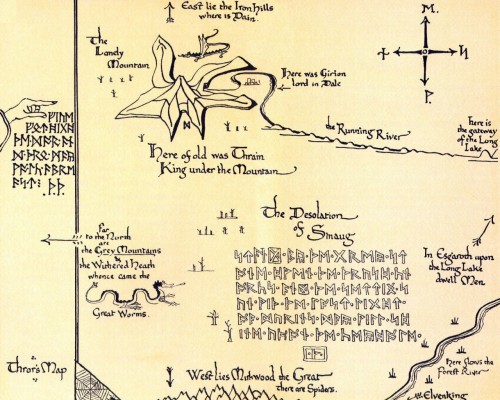
For a so-called children’s special, some details were startlingly faithful. The dwarves’ map of the Lonely Mountain is taken straight from the original book illustration.

The riddle contest between Bilbo and Gollum also kept Tolkien’s wording intact. Their deadly back-and-forth still carries weight:
Gollum:
“What has roots as nobody sees…”Bilbo:
“Mountain, I suppose.”

Bilbo:
“Thirty white horses on a red hill…”Gollum:
“Teeth! teeth! my preciousss…”
Even the voices carried weight: Orson Bean as Bilbo; Richard Boone as Smaug; John Huston (yes, that Huston) as Gandalf; Otto Preminger as the Elvenking. It was a remarkable cast for a made-for-TV cartoon.
The film ended up winning both a Peabody Award and a Christopher Award1 for enriching the public imagination. Critics were mixed. One called it promising yet simplified2; another said it was “curiously eclectic” but filled with “effective moments.” Fans, as always, split into camps. Some applauded; others bristled at the changes.
But none of that mattered to me.
Because this was my gateway to Middle-earth—my first glimpse of dwarves on ponies, riddles in the dark, dragons curled upon gold, and a reluctant hobbit discovering courage he didn’t know he had. Nearly forty years later, that enchantment still stirs.
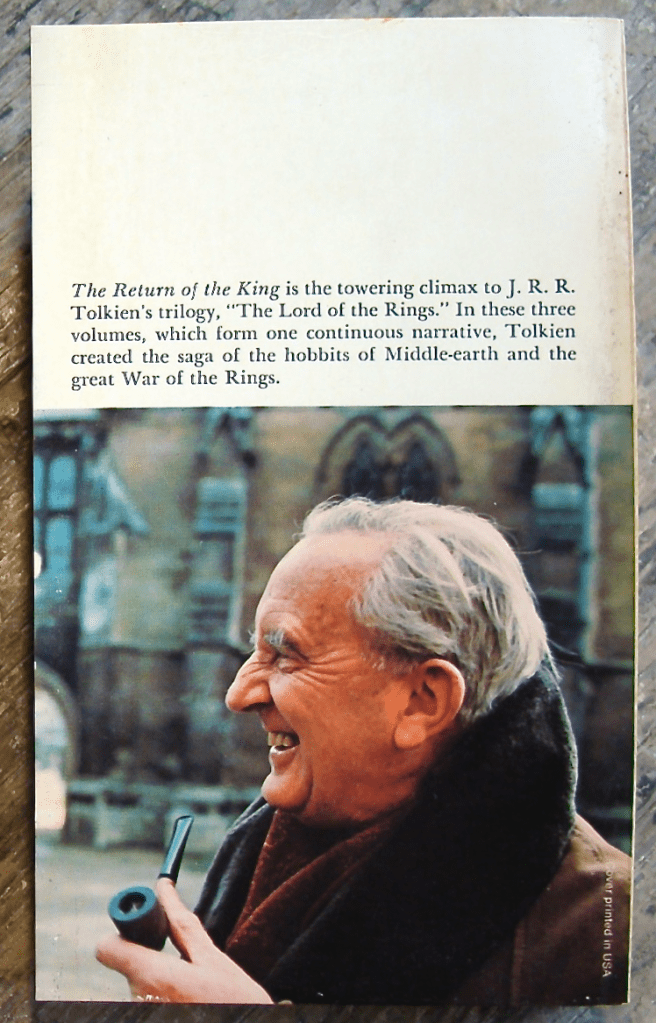
Around the same time, my mother gifted me a boxed set of The Hobbit and The Lord of the Rings—the editions I still consider definitive. On the back cover sat my most favorite photograph of Tolkien, pipe in hand, eyes twinkling like he knew you were about to lose a weekend in his pages.
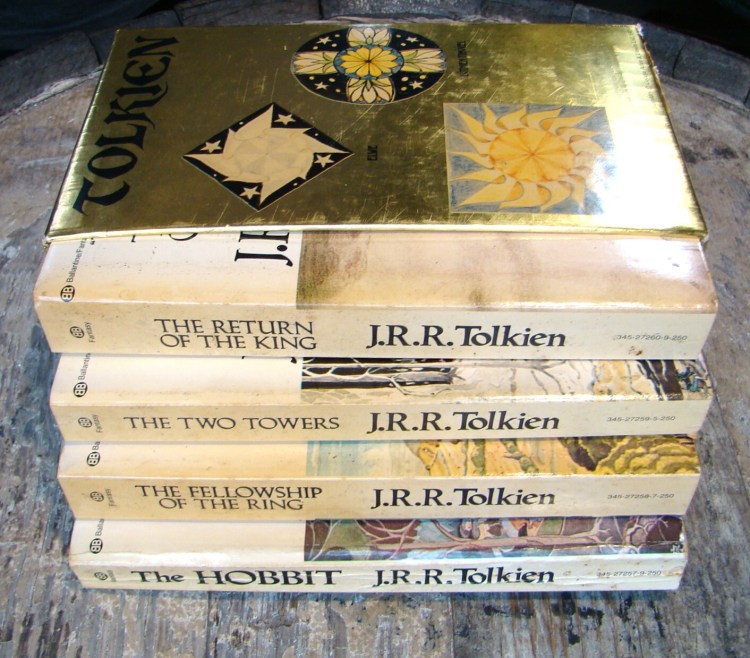
Tolkien’s books were exploding in popularity in 1977. College students in the ’60s had become adults passing along the tales. Even The Silmarillion hit number one on the bestseller list, selling over 800,000 copies.
Rankin/Bass later produced The Return of the King in 19803, following Ralph Bakshi’s earlier adaptation of The Fellowship of the Ring and The Two Towers of the main trilogy.
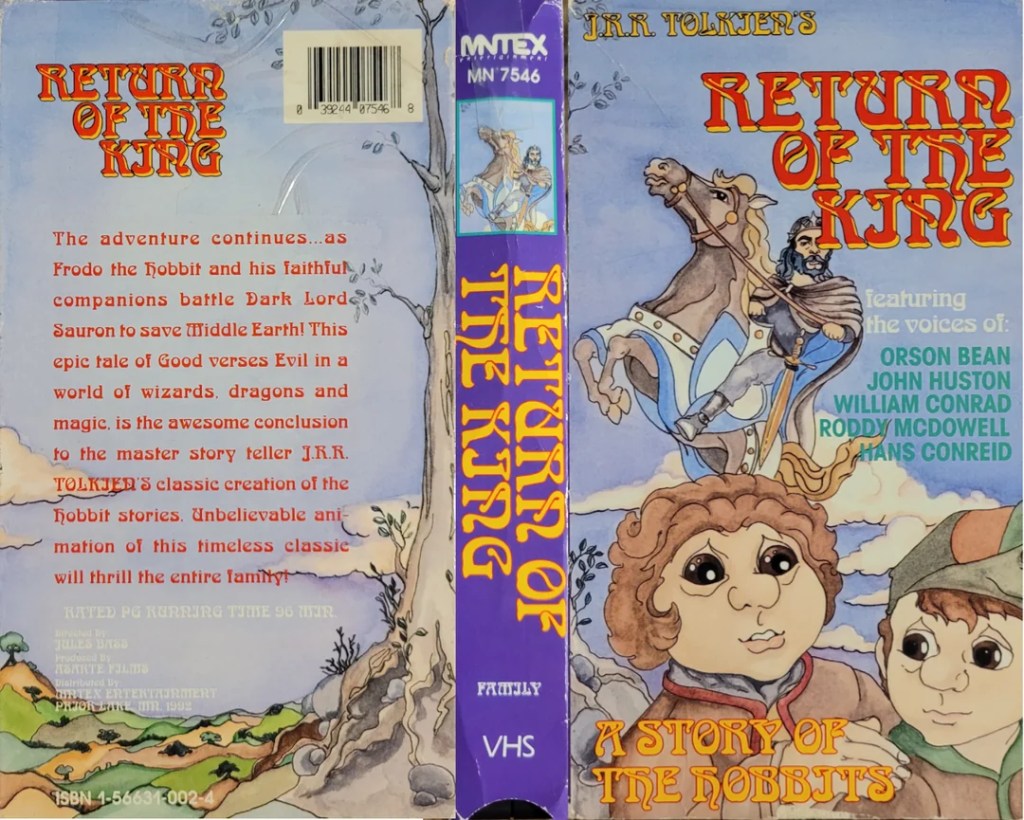
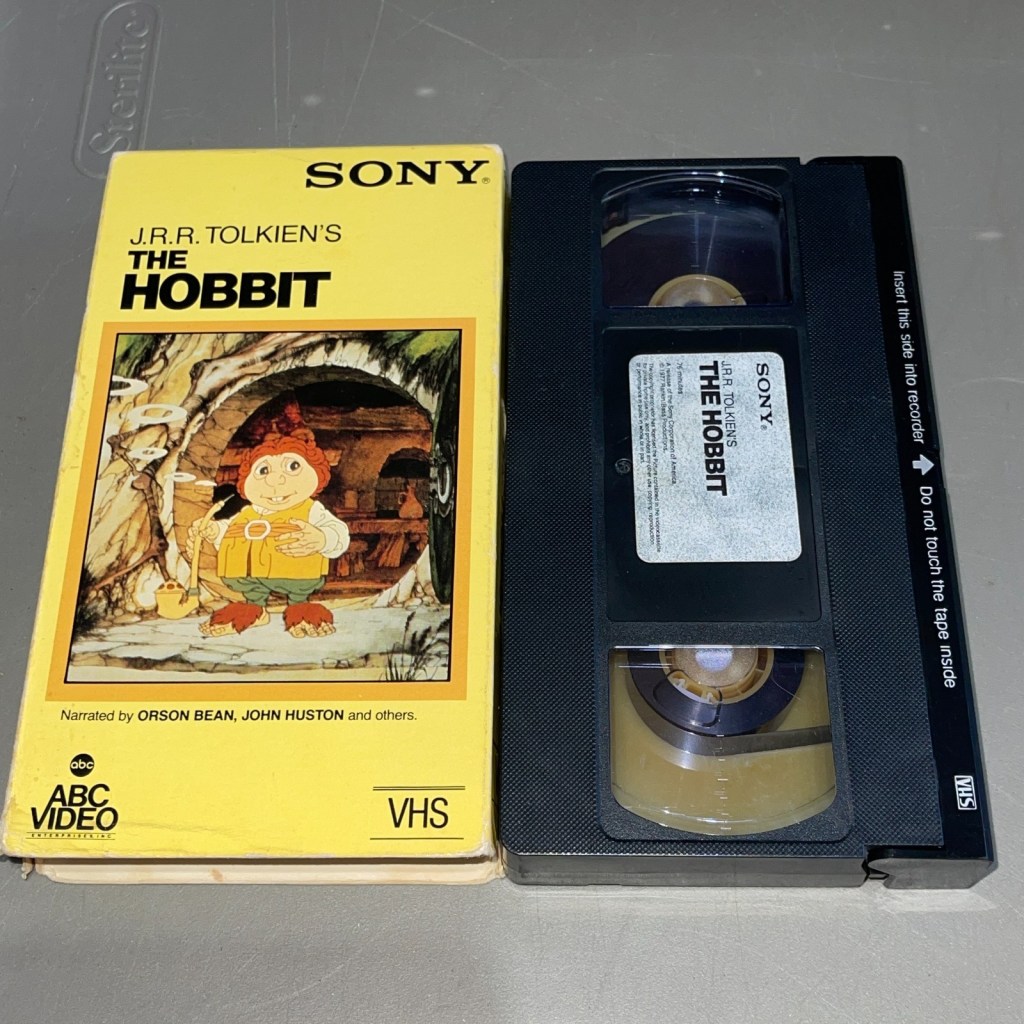
Soon after, the animated Hobbit arrived on Betamax and VHS: pricey tapes now as rare as hobbit shoes.


Today you can still find it on DVD or streaming through Disney+, Hulu, and Max.
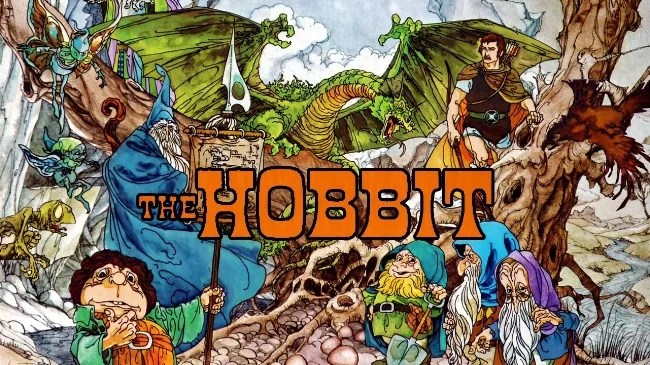
Is it perfect? No. Is it dated? Sure. But when I revisit it today, something in me still lights up. The grown man sees the seams; the thirteen-year-old sees the magic. Somewhere between those two, a hobbit steps out his round door again, grumbling about confustication and bebotherment, and I’m grinning ear to ear.
Some stories shape us. Some stay with us.
This one welcomed me to Middle-earth.
That’s it for now. Thanks for showing up. It matters.

Footnotes
- Croft, Janet Brennan (2015). “Barrel-rides and She-elves: Audience and “Anticipation” in Peter Jackson’s Hobbit Trilogy”. Rutgers University Libraries. ↩︎
- Hutchison, D. (1978). Review of The hobbit. Cinefantastique, 7(2), 29–31. ↩︎
- Culhan, John. Will the Video Version of Tolkien Be Hobbit Forming?Archived 2016-01-10 at the Wayback Machine The New York Times, Nov 27, 1977. ↩︎
 Veni. Vidi. Scripsi.