

On November 29, 1971, Edith Mary Tolkien slipped quietly from this world when she was eighty-two, leaving behind a life woven into the fabric of her family and the imagination of Middle-earth.
To the world, she may have seemed the quiet wife of J.R.R. Tolkien, but her life was more complex than any simple label. She was deeply musical, an accomplished pianist, and her resilience carried her through hardship.
Edith Bratt was born on January 21, 1889, in Gloucester, England. By 1908, when she met Ronald Tolkien, she was living in a Birmingham boarding house, supporting herself playing piano for lodgers. She was making her own way, and the independence she showed in those years shaped much of what followed.
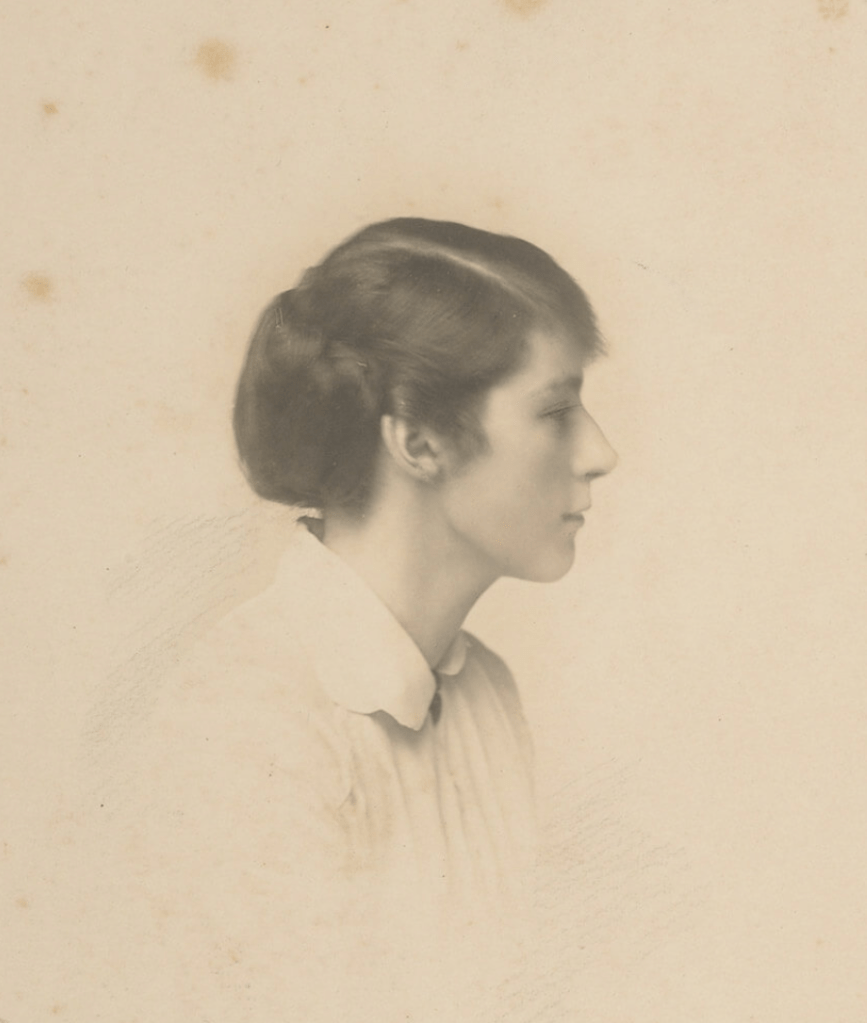
They married in 1916 after Edith converted to Roman Catholicism, a decision that caused serious friction. Their early years were marked by cramped lodgings, frequent moves, and four children arriving in quick succession.
Ronald and Edith were not perfect. Their lives included tension, misunderstandings, and the ordinary struggles of marriage. Yet within those flaws, a steadfast devotion endured, shaping both family and legend.
Edith shaped beauty out of hardship. She played piano daily, Beethoven, Chopin, Grieg, filling their homes in Oxford and Bournemouth with music. She embroidered, tended gardens, and transformed every rented house into a home. Friends remembered her as warm and witty. Her devotion to family and her inner strength carried her through the many challenges of early married life.
And she danced.
In the spring of 1917, while Ronald recovered from trench fever at a camp near Roos in Yorkshire, they wandered together into a small woodland glade filled with tall white hemlocks.
There, to his astonishment, Edith loosened her hair and danced for him alone. Years later, he wrote to their son Christopher: “In those days her hair was raven, her skin clear, her eyes brighter than you have seen them, and she could sing, and dance.”

In that woodland glade, as Edith danced, a mortal love glimpsed something eternal. What God had woven in the forest, in light and shadow, in music and motion, Tolkien mirrored in his own legend, a tale of beauty, courage, and grace that would endure far beyond their lives.
That dance became the heart of their legend and the seed of the most personal tale Tolkien ever told, the meeting of Beren and the immortal elf-maiden Lúthien.
In a letter to his son, Tolkien explained that this woodland moment inspired the story. The weary mortal stumbling upon the most beautiful being in the world, dancing in a forest glade, became the seed of his myth.
The scene was later set in deathless words in The Silmarillion, edited by their son Christopher. To fully experience this, listen to the reading of the text by Martin Shaw, whose voice is rich and textured, perfect for Tolkien’s works:
“It is told in the Lay of Leithian that Beren came stumbling into Doriath grey and bowed as with many years of woe, so great had been the torment of the road.
But wandering in the summer in the woods of Neldoreth he came upon Lúthien, daughter of Thingol and Melian, at a time of evening under moonrise, as she danced upon the unfading grass in the glades beside Esgalduin.
Then all memory of his pain departed from him, and he fell into an enchantment; for Lúthien was the most beautiful of all the Children of Ilúvatar.
Blue was her raiment as the unclouded heaven, but her eyes were grey as the starlit evening, her mantle was sewn with golden flowers, but her hair was dark as the shadows of twilight.
As the light upon the leaves of trees, as the voice of clear waters, as the stars above the mists of the world, such was her glory and her loveliness; and in her face was a shining light.
“But she vanished from his sight; and he became dumb, as one that is bound under a spell, and he strayed long in the woods, wild and wary as a beast, seeking for her.
In his heart he called her Tinúviel, that signifies Nightingale, daughter of twilight, in the Grey-elven tongue, for he knew no other name for her.
And he saw her afar as leaves in the winds of autumn, and in winter as a star upon a hill, but a chain was upon his limbs.”
— Excerpt From ‘Of Beren and Lúthien,’ Chapter 19, The Silmarillion, J.R.R. Tolkien.
Ronald himself said simply: “I never called Edith Lúthien, but she was the source of the story.”
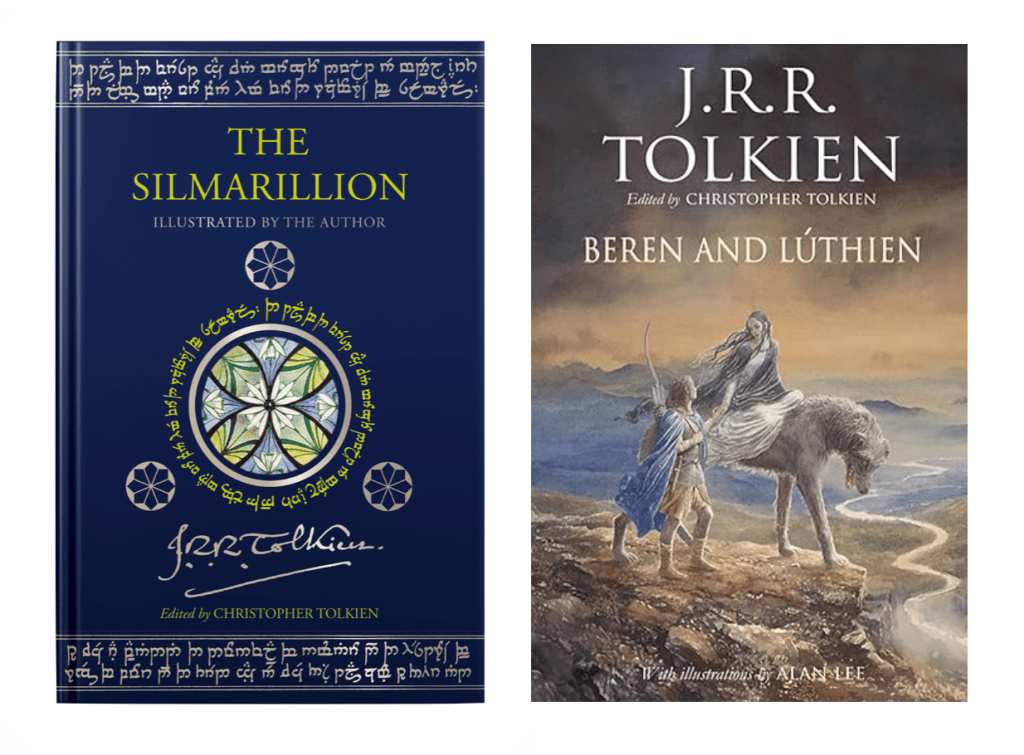
The tale of Beren and Lúthien was later published as a standalone book, drawn from Tolkien’s manuscripts and letters, edited by their son Christopher.
This edition allows readers to experience the story in its own right, preserving the heart of the romance that began in a Yorkshire woodland and lived on in Edith’s memory.
It is a testament to how love, ordinary yet steadfast, can inspire enduring legend, reflecting, in small measure, the beauty of what God created, echoed in Tolkien’s imagination.
When Edith died, Ronald had the single Elvish word Lúthien carved beneath her name on their shared gravestone. Two years later, when he followed her, their children added Beren beneath his.
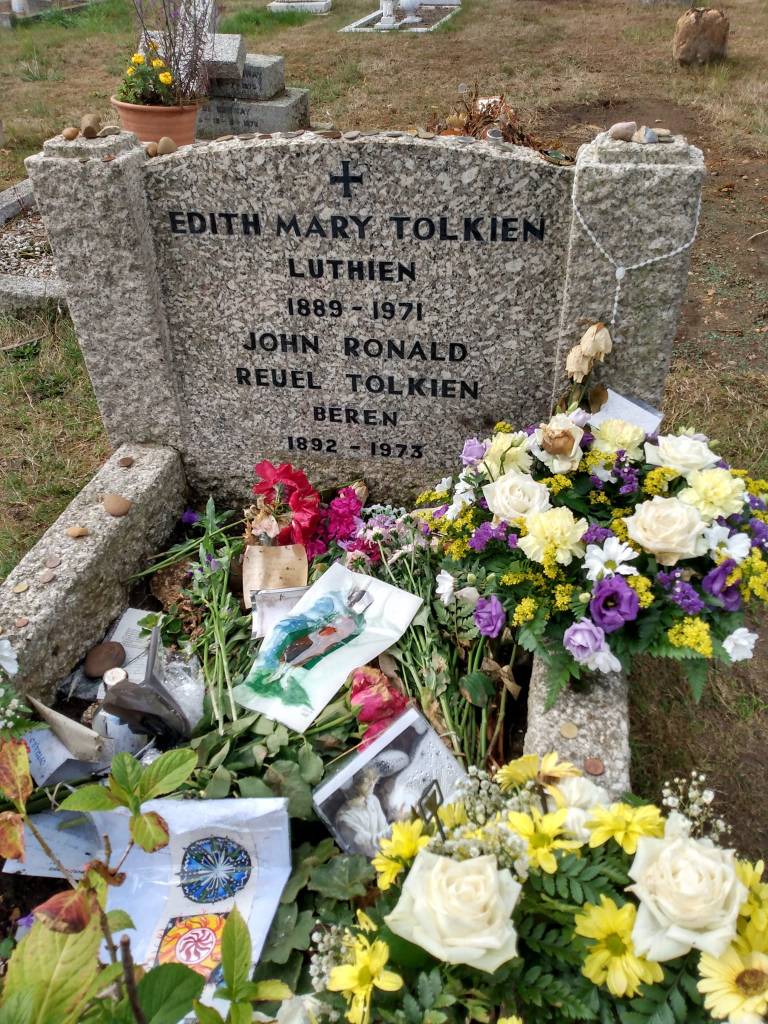
Long after the woodland dance in Yorkshire, Edith, the elf-maiden, and Ronald, the mortal, were reunited.
For nearly two years, he lingered in the world she had left behind, until with Ronald’s passing, the final veil fell between them.
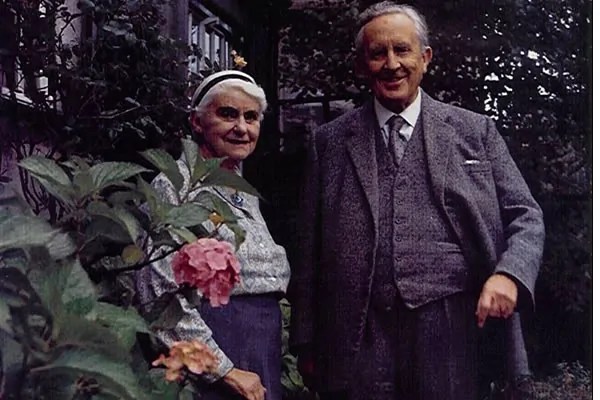
Somewhere, perhaps in a starlit clearing of white hemlock, she dances still: an enduring echo of love and the extraordinary grace that shaped a life well-lived.
That’s it for now. Thanks for showing up. It matters.

Top photo credit: Edith Bratt. c. 1906 age 17. The Victoria Studio / Tolkien Trust.
References
- Edith Tolkien (Wikipedia) — biography, early life, marriage, and conversion. (en.wikipedia.org)
- J.R.R. Tolkien’s Wife, Edith Bratt, BookAnalysis.com — details on her conversion, challenges, and musical gifts. (bookanalysis.com)
- Tolkien Marries in Warwick, Our Warwickshire — marriage and conversion context. (ourwarwickshire.org.uk)
- In the Name of Love: On Ronald and Edith, Middle-earth Reflections — reflections on her independence and role in Tolkien’s life. (middleearthreflections.wordpress.com)
- Planet Tolkien – Edith and Ronald: Lúthien and Beren — their meeting, conversion, and influence on Tolkien’s work. (planet-tolkien.com)
 Veni. Vidi. Scripsi.