
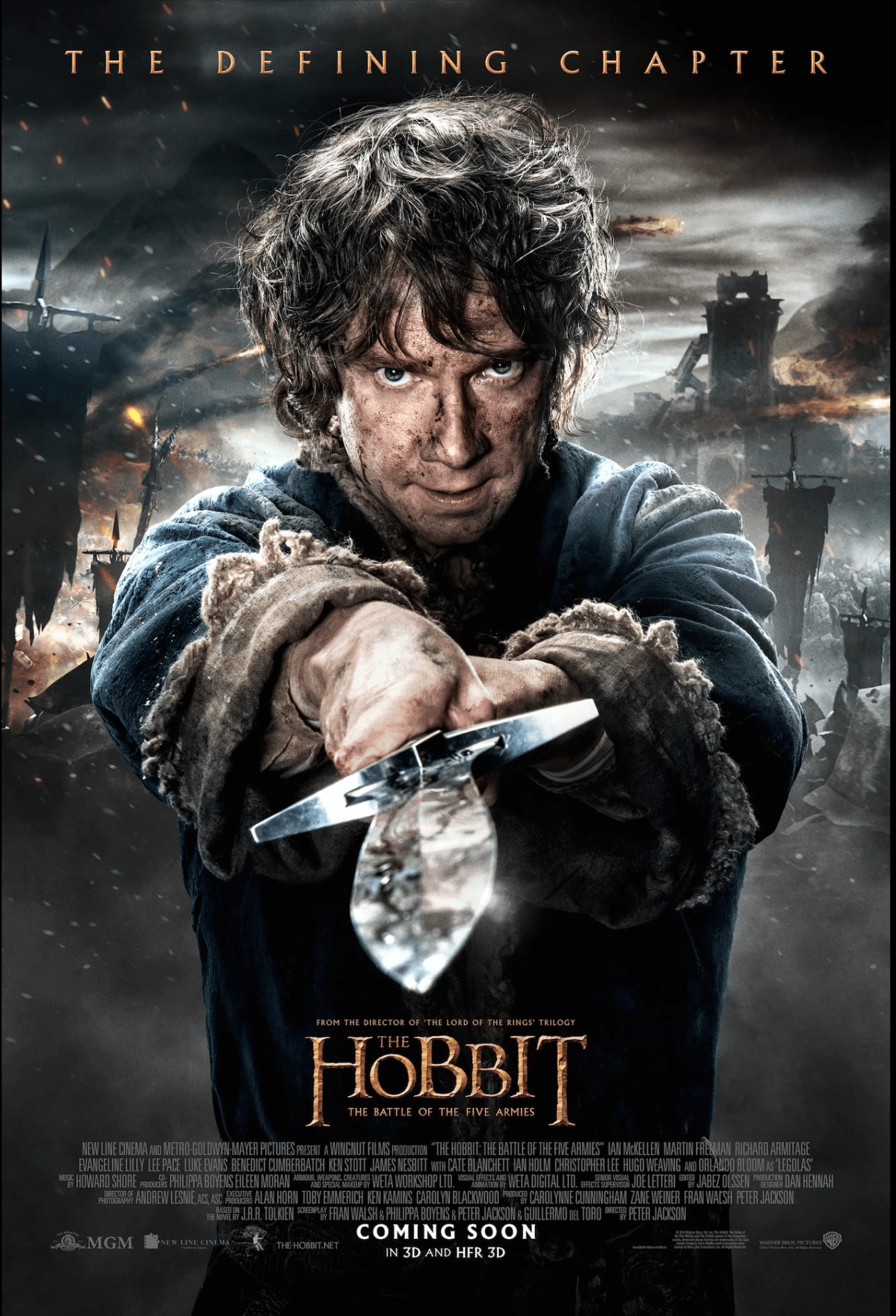
Every journey eventually asks its price.
When The Battle of the Five Armies was released on December 17, 2014, it brought Peter Jackson’s Hobbit trilogy1 to its conclusion. Not with riddles or songs, but with fire, steel, and reckoning. This final chapter is less about discovery and more about consequence, less about setting out and more about what remains once the road runs out.
This is where the long walk through Middle-earth comes due.
From Winding Path to Open Field
Across this three-part observance, we’ve seen two images.
First, the twisting, disorienting path of the journey itself. What began as a sunlit walk from Bag End became confusion, temptation, and loss of direction. By this final film, the path has straightened, but not because things are easier. It has straightened because there is no avoiding what lies ahead.

Second, Smaug rising from the treasure hoard, the shadow waiting at the end of the road. In this film, that shadow has already passed, but its consequences ripple outward. The dragon’s absence does not bring peace. It brings vacuum. And into that vacuum rushes pride, fear, and the old hunger for gold.

These two images meet here:
the road ends, and the shadow leaves its mark.
A Film About Cost
This is the most divisive film of the trilogy, and understandably so.
It is heavy with battle. Heavy with CGI. Heavy with motion and noise. Tolkien’s short account of the conflict, itself almost an afterthought in the book, becomes the centerpiece here. Some viewers felt it was too much, too long, too loud.
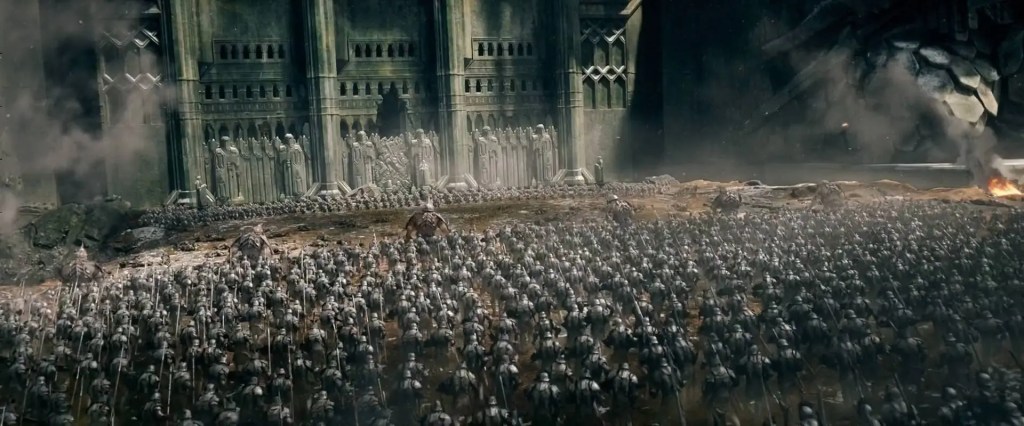
Others appreciated the attempt to give weight to what Tolkien often left implied: that war consumes not just armies, but friendships, ideals, and innocence.
Either way, this film is not trying to charm you. It is trying to finish the story.
Thorin Oakenshield and the Tragedy of Gold
At the heart of this final chapter stands Thorin.

His descent into dragon-sickness is uncomfortable to watch, but that discomfort feels earned. The gold does not merely tempt him; it reveals him. Pride hardens. Fellowship frays. And Bilbo, our quiet moral compass, stands nearly alone again, choosing truth over loyalty, peace over possession.
This is where The Hobbit quietly reminds us that courage is not always loud, and heroism is not always rewarded.
The Battle, and What It Leaves Behind
The titular battle is massive, chaotic, and relentless. Armies collide. Old grudges surface. Alliances strain and bend. And through it all, the sense lingers that no one truly “wins.”
Jackson’s camera rarely lets us forget the cost: fallen dwarves, broken bonds, a world slightly dimmer for what it has endured.

This is Middle-earth at its least romantic, and perhaps its most honest.
The Hobbit Who Goes Home
And then, at last, the noise fades.
Bilbo returns to the Shire, richer in soul and forever changed. The world he left behind does not fully understand what he has seen, and thats okay. Some journeys cannot be explained to those who stayed home.
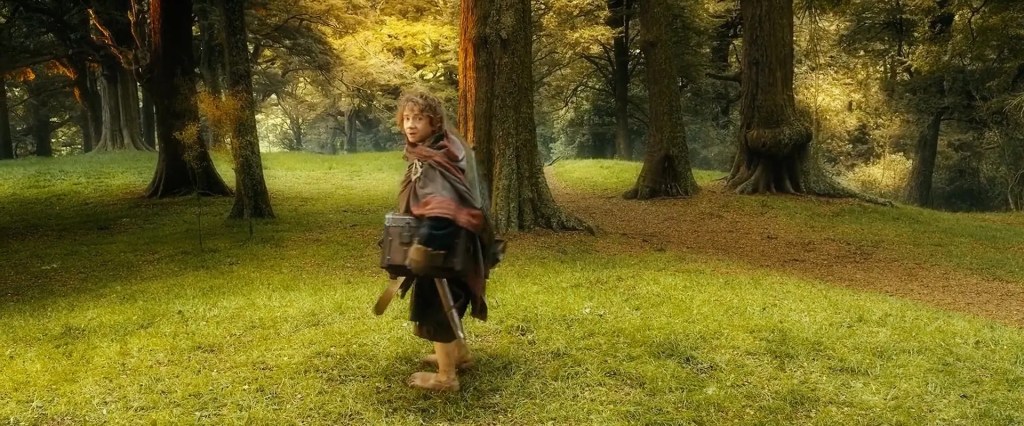
The path through Mirkwood has ended.
The shadow beneath the mountain has spent itself.
What remains is memory, wisdom, and a quieter courage.
Reflection
Taken together, Jackson’s Hobbit trilogy is uneven, ambitious, indulgent, and at times genuinely moving. Stretching a slim children’s book into three epic films was always going to invite criticism, and rightly so. Yet within that expansion are moments of real beauty, moral clarity, and mythic weight.
This final chapter reminds us that every adventure, however lighthearted its beginning, eventually reveals to us who we have become along the way.
And sometimes, the bravest thing a traveler can do is go home changed.
That’s it for now. Thanks for showing up. It matters.

- The three films are:
The Hobbit: The Unexpected Journey, Dec. 14, 2012.
The Hobbit: The Desolation of Smaug, Dec. 13, 2013.
The Hobbit: The Battle of Five Armies, Dec. 17, 2014. ↩︎
 Veni. Vidi. Scripsi.