
Sometimes the best guides don’t lead you away from a story. They lead you deeper in.
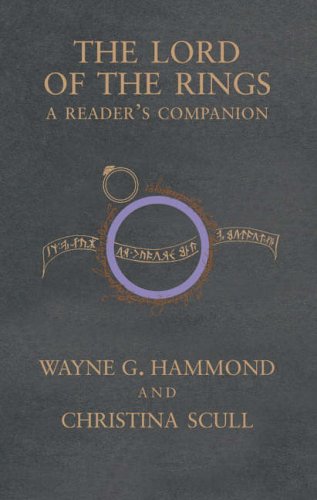
The Lord of the Rings: A Reader’s Companion (2005)
Twenty years ago, on December 27, 2005, Wayne G. Hammond and Christina Scull gave readers something rare: a companion that doesn’t explain the magic away but reveals the care behind it. The Reader’s Companion walks alongside Tolkien’s masterwork, page by page, offering context, clarifications, and the kind of scholarly attention that deepens rather than diminishes wonder.
The book emerged from decades of work. Hammond and Scull, both noted Tolkien scholars, knew the territory well. They’d already edited The Lord of the Rings for the fiftieth anniversary edition in 2004, correcting errors that had accumulated over half a century. The Reader’s Companion followed naturally, a detailed annotation of the text that respected both the story’s artistry and the reader’s intelligence.
What makes this companion different from most literary guides is its restraint. It doesn’t theorize or philosophize beyond what the text itself invites. Instead, it illuminates Tolkien’s choices: why certain words appear in Elvish, how he revised chapters across multiple drafts, what historical or linguistic details inform a scene. The authors trace connections without forcing them, letting readers discover the architecture beneath the narrative.
For anyone who’s read The Lord of the Rings and thought, “I wonder why Tolkien did that,” this book offers answers. Sometimes the explanations are practical: a character’s name changed between drafts, or a geographical detail needed correction. Other times they’re richer: a phrase carries Old English echoes, or a scene reflects Tolkien’s Catholic faith and wartime experience in ways easy to miss on first reading.
The Reader’s Companion also preserves something valuable: evidence of Tolkien’s meticulous craft. He didn’t write carelessly or by accident. He revised, reconsidered, and refined across decades. Hammond and Scull document that devotion, showing how patience and precision served the story’s deeper purposes. In an age of quick drafts and instant publishing, that kind of care stands as its own quiet testimony.
Reading through the Companion alongside the trilogy can feel like sitting with someone who knows the landscape well, someone who points out what you might have walked past. It doesn’t replace the experience of encountering Middle-earth on your own. It enhances it, the way a good teacher opens doors you didn’t know were there.
What makes it special
- Provides page-by-page annotations that respect the reader’s engagement with the story.
- Draws from Tolkien’s letters, drafts, and unpublished writings to illuminate his creative process.
- Clarifies references to languages, mythology, history, and theology woven throughout the narrative.
- Corrects textual errors and explains editorial decisions made for the fiftieth anniversary edition.
Why it matters
- For longtime readers, it offers fresh insights into a familiar story, revealing layers they may have sensed but not fully understood.
- For newcomers, it serves as a resource that doesn’t spoil the journey but enriches it as they go.
- For anyone who values craft, it demonstrates how attention to detail serves story and meaning.
- It models scholarly humility: the authors know more than they say, but they say only what serves the text.
- It reminds us that great stories reward patience, that depth and beauty often lie just beneath the surface, waiting for those willing to look.
Two decades on, The Lord of the Rings: A Reader’s Companion remains an essential resource, not because it makes Tolkien’s work easier, but because it helps readers see more clearly what’s already there. It’s the kind of book that invites you back to Middle-earth with new eyes, ready to notice what you missed before.
That’s it for now. Thanks for showing up. It matters.

 Veni. Vidi. Scripsi.