
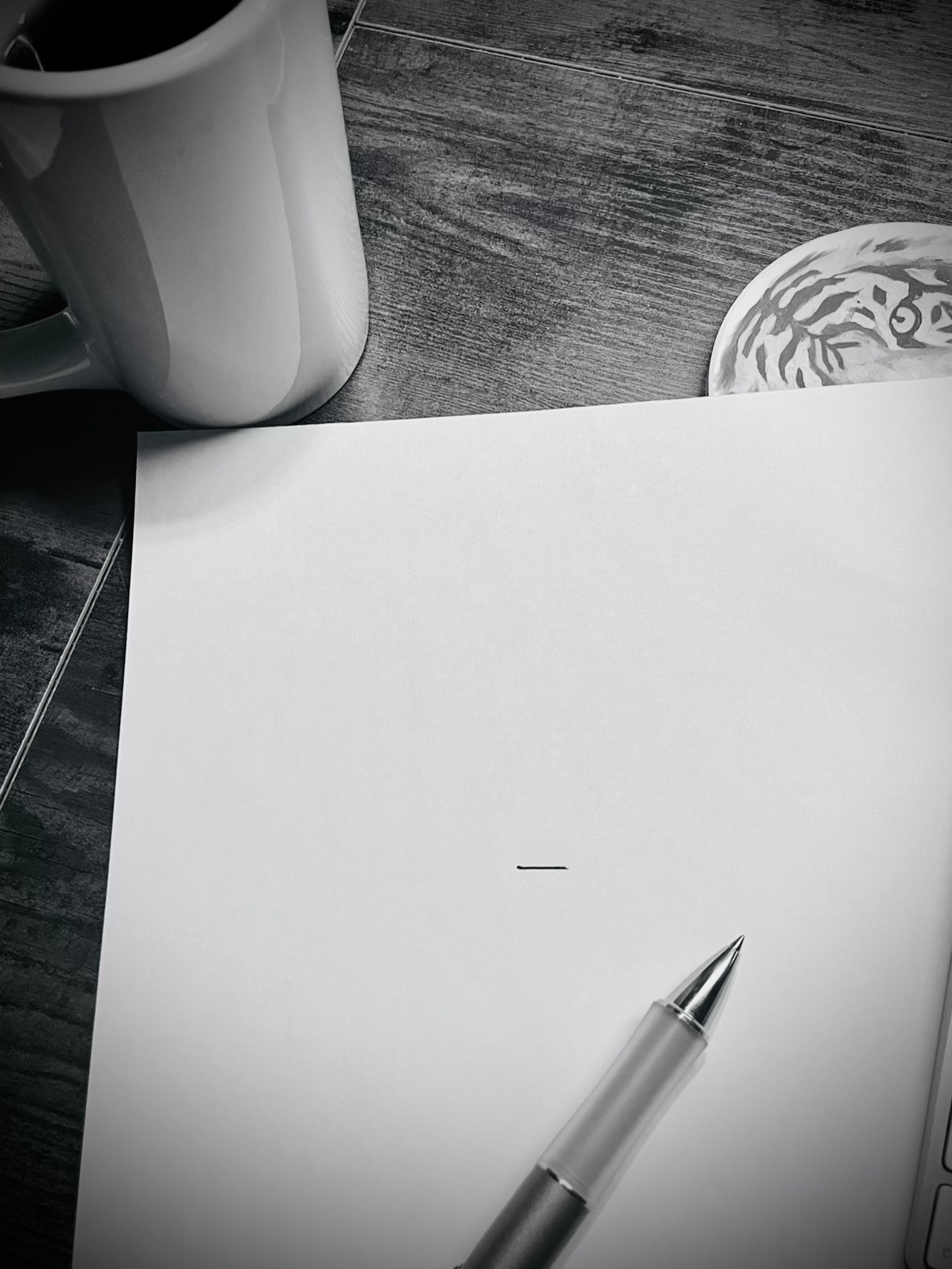
I came late to the em dash. Embarrassingly late, really…
Like a good restaurant that’s been there all along, right down the street, and you just kept driving past.
For most of my writing life, I treated punctuation like traffic signals.
Period: stop.
Comma: slow down.
Semicolon: pause, but stay with me.
Colon: something formal is coming whether you like it or not.
They did their job. Still do.
But for the kind of writing I seem to have settled into, they always felt a size too small.
Like wearing dress shoes to the beach.
Then somewhere along the way, I started paying attention to the em dash.
Not the hyphen, which is content to keep things together. Not the en dash, which most of us pretend to understand. I mean the full em dash — it looks like this: —
The one that takes up a little space and doesn’t apologize for it. Just a long line, sitting there between thoughts, doing more work than it lets on.
What it does, as best as I can tell, is give a sentence room to breathe.
A period closes a door. An em dash leaves the window open.
The thought isn’t over. It’s just resting.
That matters more than I realized.
I tend to write the way I think — which is to say, not always in straight lines. A sentence starts somewhere and finds its way as it goes. For that kind of writing, you need something that can hold a thought steady without shutting it down. Something that can make room without making a production of it.
The em dash does that.
Quietly.
There’s something almost musical about it. Not the hard stop of a period or the measured pause of a semicolon. More like holding a note just a little longer than expected — long enough for it to mean something.
I didn’t have language for this when I first started using it. I just knew the sentence felt more like something I might actually say out loud.
And maybe that’s the heart of it.
Most of us don’t speak in perfectly finished thoughts. We circle back. We add something we forgot. We leave space for the other person to follow along.
Writing can feel stiff when it refuses to do that.
I didn’t realize it at the time, but I think I was looking for a way to say things without having to say them all the way — and the em dash gave me that.
There’s a kind of restraint in that. Not everything needs to be nailed down tight. Not every thought needs a clean edge.
Sometimes it’s enough to leave a little space and trust you, reader, to meet me there.
I expect there are folks who would say that’s a lack of discipline — that the em dash gets leaned on too often, used as a shortcut where a writer ought to be more precise.
They’re probably not wrong.
But precision isn’t always the same thing as clarity. And clarity doesn’t always come from tightening everything up.
Sometimes it shows up in the small pause. The place where a sentence slows down just enough to let the meaning catch up.
The older I get, the more I notice how much of life isn’t said directly. A look across the table. A quiet moment on a back porch. Two men riding in a truck with the radio low and not much being said at all.
A lot gets carried in those spaces.
Maybe that’s why this way of writing feels more honest to me now than it used to — not because it says more, but because it leaves room for what doesn’t need to be said outright.
For that, I’ve found, the em dash is just about right.
That’s it for now. Thanks for showing up. It matters.

 Veni. Vidi. Scripsi.