
The song that wouldn’t let go
In a world full of noise and division, certain songs arrive like quiet companions. They ask honest questions and refuse to let go of them. “Gideon,” from Z by My Morning Jacket, is one such song. The echoing guitars and Jim James’ yearning vocals open space for honest searching. They pose simple questions. This resonates with committed believers. It also resonates with those who have walked away from faith. It touches those who never saw much in it to begin with.
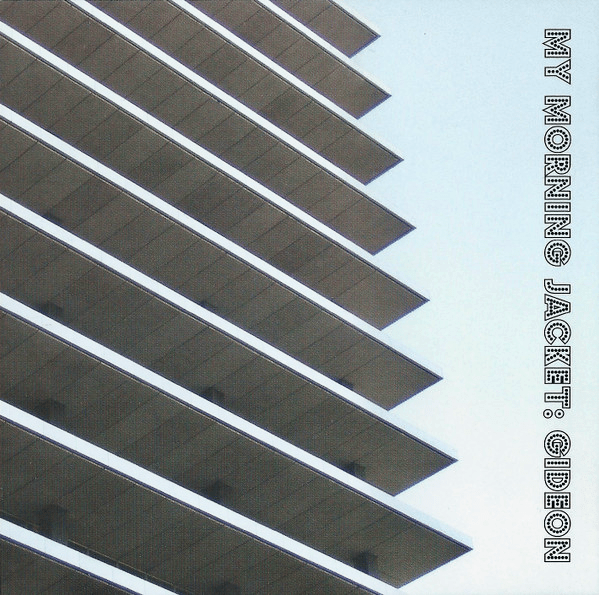
Even the single’s cover art sets the tone. The photo is shot from below. It looks up at a cold concrete building. All horizontal slabs stack toward a pale sky with no warmth. There is no entry point and no acknowledgment of the person standing beneath it. It is an image of something institutional and indifferent. Whoever chose that image understood the song.
The man behind the song
Jim James is the band’s frontman and songwriter. He has long described himself as recovering from the faith tradition of his upbringing. Growing up, he encountered both its beauty and its burdens. “The guilt and the shame,” he has said plainly, left a mark on him and on people he watched it affect. In interviews over the years he speaks openly of this tension, appreciating elements of faith while wrestling with how rigid structures can alienate rather than draw people closer to something transcendent.
The dead religion he is singing about, he has said, belongs to fear, and fear has no denomination. Nothing in his interviews suggests otherwise.
This personal journey frames “Gideon” not as a rejection of faith. It serves as a raw, urgent call for faith to be more vital and compassionate.
Come down off the wall
The song opens with a direct statement:
Gideon, what have you told us at all?
Make a sound, come down off the wall.
It is a call to a silent figure, perhaps an icon, a doctrine, or a version of religion that feels mounted high and unreachable, to descend into real life, to speak, to engage. The line
Religion should appeal to the hearts of the young
carries deep longing. Spirituality at its best should spark wonder, empathy, and hope in the next generation, not push them away through fear or judgment.
What does this remind you of?
The repeated question “what does this remind you of?” is never answered. It is a mirror held up to the listener, asking us to name what we recognize. Religious wars. Political tribalism. Moral mob behavior. The tribal instinct that rises when fear takes over.
Yet the repeated plea to listen suggests hope. Many of us, deep down, sense when something is wrong.
The sound of it
What makes “Gideon” endure is how the music carries the message as much as the words.
The track opens with spindly, tumbling guitars, eerie and inviting, creating a vast echo like calling into a canyon. Driving bass and smashing drums build underneath. Jim James’ voice, soaked in reverb, starts intimate and questioning, then rises with urgency. It is rough at the edges, but compelling. There is vulnerability there, and something close to a plea.
As the song progresses, the arrangement swells. Strong guitar chords enter in the later choruses, pushing everything forward:
Animal, come on
What does this remind you of?
The movement from quiet reflection to explosive release mirrors what it feels like to wrestle with faith. Questions build. Frustration rises. And then something breaks open.
Live and larger
In live performances, the experience becomes something shared.
Whether in extended jams or orchestral settings like the collaboration with the Boston Pops, the song takes on a life of its own. The sound grows larger, fuller, almost overwhelming. Fans often describe it as euphoric, something that lifts and carries.
At that point, the music is doing something words cannot.
Where it lands
These themes land differently depending on where you stand.
For believers, the song echoes Jesus’ own warnings about hypocrisy. It calls out what looks alive on the outside but is empty within. It is not hard to admit that Christians sometimes contribute to the very problems the song names. That inconsistency hurts people. It drives them away.
For those who have stepped away, or never believed at all, the song can feel like recognition. It names something real.
For others, it simply keeps the question open.
An unlikely vessel
They are asking questions I recognize, even if I do not share where those questions sometimes lead. But is it possible, even slightly, that God uses something like this? He meets people where they are, whether in doubt, frustration, or distance. As He has done before, He uses even unexpected voices to point beyond themselves?
I do not know for certain. But it is a question worth holding.
God has used all kinds of unlikely things before. Poets. Prophets. Stories. Songs.
And if He does meet someone there, He does not leave them there. After Jesus is more than finding comfort in the feel-good parts. It involves confronting who He truly is. This meeting is the most serious and wonderful reckoning a person can have.
The raw emotion in “Gideon” reminds me of the Psalms, especially passages like Psalm 13:
How long, Lord? Will you forget me forever?
How long will you hide your face from me?
Honest frustration has always had a place in faith.
And sometimes it sounds like this.
The unchanging thing
Amid all the questions, one thing remains steady for me.
Jesus Christ is the way, the truth, and the life. No one comes to the Father except through Him. He is not distant or silent. He came down, fully here, meeting people where they actually live.
He welcomed the outcast. He confronted what was false. He offered rest to the weary.
“Gideon” does not name Him. But the longing it expresses points in a direction that is worth considering.
Go hear it
If you have not heard “Gideon” yet, the links below are a good place to start. Let the music do what words can’t quite finish.
Start with the studio version — that’s how the song first found me. Then, if you want to hear it expand, check this powerful 2006 live performance with the Boston Pops. The strings take it somewhere else entirely.
Thanks for reading and listening along.

 Veni. Vidi. Scripsi.