
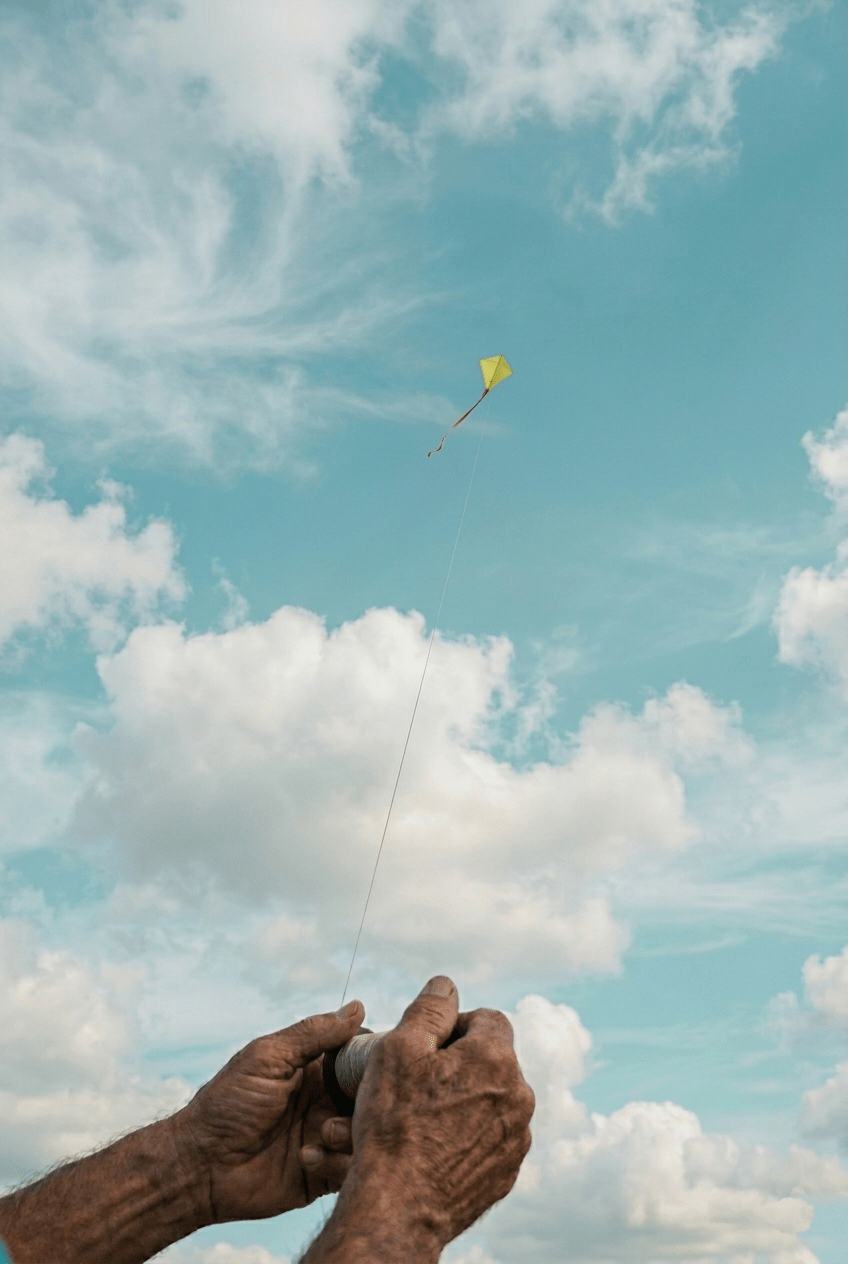
Last week we looked at a song called “Kite.” This week I want to turn to what feels to me like its companion—a song that covers similar ground but arrives with a different weight. Where “Kite” accompanied me, “Sometimes You Can’t Make It on Your Own” confronted me. Where “Kite” opens its hands, this one holds up a mirror.
I keep thinking about those walking through a kind of loss they never chose. Some songs walk alongside loss. Others step quietly into its middle and simply stay. This one does the latter. Click the image below to hear the song.
I heard “Kite” first. Then I heard this one, and something that had been quietly opening in me clicked into place. I’ve never been able to hear them apart from each other since.
What kind of song this is
There is a single lyric that has followed me longer than any other. I hear the “voice-quiver” in the delivery when the singer pleads, “Don’t leave me here alone.” For me, that line is a collision of two different seasons.
It reaches back fifty years to a thirteen-year-old boy in a house where the weather had suddenly changed. When the structure of our family shifted and the rooms grew quiet, I was left navigating a new kind of silence with a father I didn’t really know. We were sharing a roof, but the signal was lost. In my memory, that boy is still standing in that hallway, his hand on the doorknob he no longer knew how to turn, trying to understand how a house stops being a home and how two people can be so close yet so far apart.
But the song also catches me where I am now. It reaches for the man who later sat with his father and saw in his eyes a quiet resignation, the second kind of absence already beginning to settle in. When I hear that quiver in the voice, the two moments get wrapped up together. It is the sound of the boy and the man both realizing that we can’t always carry the weight by ourselves.
“It’s you when I look in the mirror.”
It is not a compliment; it is a recognition. You see the same stubbornness looking back. I realize now that the hardness I learned back then left me less ready for what came later. There were years when that same hardness made me swallow words I should have spoken, and push back when gentleness would have served us both better.
What I inherited without knowing it
My father was a man of his generation. He carried feelings that were strong and, I suspect, overwhelming—but he kept them beneath the surface. He expressed love by showing up, by providing, and by enduring. He left the articulating to someone else. To men like me, maybe.
I did not inherit his silence. I can name the shadow behind the eyes in a way he never could — something his generation was rarely taught to do. Saying the words doesn’t erase the memory, but it makes it lighter — more like a story I’m still learning how to carry.
Love looked like consistency
Through all of it—the distances, the differences, the years that moved faster than either of us was prepared for—my father was there. Imperfectly, irritatingly, consistently there. Even when I didn’t deserve it. Especially when I didn’t deserve it.
There is a pattern in that unglamorous faithfulness. I recognize it in the father who keeps watch at the end of a long road, scanning the horizon before the son is even in sight. Ordinary as my father was, he reflected a steadiness. I’ve come to see that such steadiness often carries a hint of something steadier still. I believe grace moves through the people closest to us, often without us realizing it until much later.
What the mirror finally shows
The song ends where it has to—not in triumph, but in the kind of love that has seen everything and stayed anyway.
“Sometimes you can’t make it on your own.”
I know that now in ways I didn’t when I first heard it. I know it in the place where pride used to live, the place that has been slowly vacated by losses, by anger I had to name before it would loosen its grip, and by the steady work of being humbled. My father among them.
The two songs together trace a path—from the wind to the mirror, from release to recognition. I don’t know which way the wind will blow. I know that this is not goodbye. And when I look in the mirror, I know whose eyes are looking back.
That’s enough. For now, that’s enough.

 Veni. Vidi. Scripsi.